
A poor fitting welding cap frustrates you. After hours it become worse and makes job difficult. All you want to do is concentrate on that weld pool, yet all you are thinking about is the welding cap. It rubs your temples, it falls down, it just doesn’t feel right.
What realy matters is how it fit, not what color or fabric it’s made from. And if it’s a bad fit you get distracted, if it’s a good fit, it fades away and you work.
How to Measure Your Head for a Welding Cap
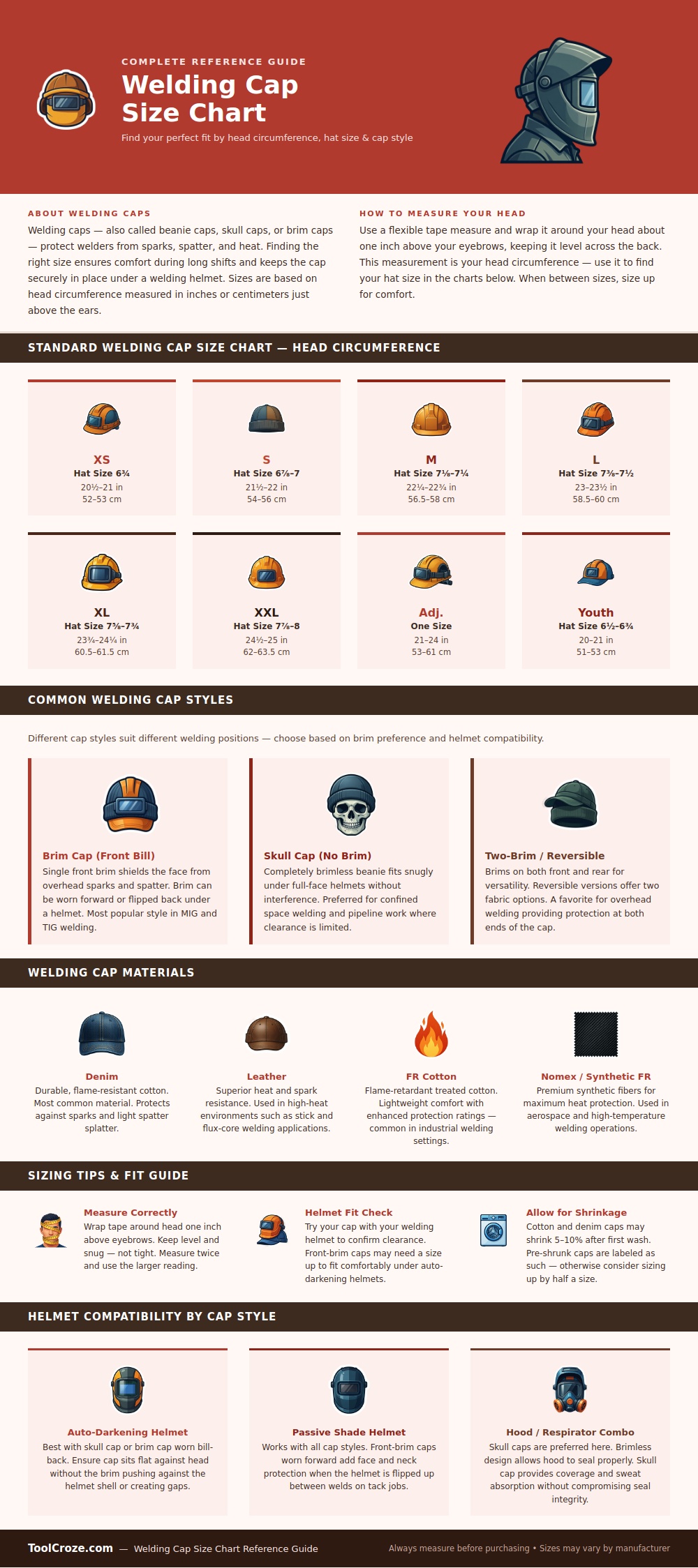
To take the guesswork out of it, they’ve created a chart that maps hats sizes to head circumference. You don’t have to go into a shop and try them all on. Welding caps is not measured like clothing. It’s just centimeters or inches above your ear.) Headwear require exact measurement while we’re conditioned to purchase clothing based off medium and large sizes.
Take a measurement, twenty-two and a half inches? Look for a size seven cap. That happens to be in the medium range. If you fall somewhere between two adult-sized sofa, size up. A little extra wiggle-room will prevent those constant pressure points during long shifts that cause headache.
Sizing works hand-in-hand with material selection. Something rookies don’t consider enough. For instance, while cotton shrink, denim lasts longer and resists sparks. That means a brand-new denim cap may fit your head like a glove but become to tight following washes … unless it’s been pre-shrunken by the maker. If you’re going to use leather, which resist heat best at high temps, keep in mind it won’t stretch very far during first few wears.
Adjustable caps covers most head sizes and are a good option if you hate taking measurements, though some may not be quite so snug under certain helmet.
The other problem is helmets. If you’re wearing an auto-darkening helmet, your cap needs to sit flat against your scalp without pushing against the inner shell. The cap must also be flush against your head so there are no pressure point. A skull cap without a brim will likely be most comfortable since it removes bulk that can cause pressure points and gaps.
But what if you want face protection? In this case, you may have to go up a size as well. That way, when the bill flips back, it won’t disrupt the seal of the helmet. It sounds like nothing, but it makes all the difference when doing overhead work and feeling like your helmet isn’t going to stay put.
Or you can just grab one of those stretchy tape measures and do it yourself: place the tape over your forehead roughly an inch or so above your eye brows and hold it snug all the way around. Repeat two times and go with the bigger than the two numbers. Seems easy but everyone does it wrong. They either pull the tape too tight or hold it loose, this results in an incorrect measurement because they rush instead of spending the extra 30 seconds getting it right.
After that, everything else make sense. Your material selection for your welder type, and your sizing. Then you’re off playing with the arc instead of constantly fiddling with your gear every 10 minutes.
The right size cap isn’t only comfortable but also honors the craft itself and the environment you perform it in. Get something on that fits and before long, you don’t even notice your protective gear is there. You should of got something that fits. Do yourself a favor, take some measurements, read the chart, then go make something without worrying about a hat slipping down your face.
