
On a chilly night you might find that your heater is having some trouble. It tries to come on, there’s a little sputter from the burner, and it dies.
It must be something wrong with thermostat! And maybe it’s the cold weather? Maybe it is, unless it isn’t. The cause of the issue in most instances isn’t “out” based off your environment, it’s “in” your wall. The problem isn’t your appliance: it’s the size of gas line feeding it.
Why Gas Pipe Size Matters for Your Heater
Consider the analogy of natural gas piping as plumbing, water plumbing. Imagine trying to fill your swimming pool using just a garden hose. No matter how much pressure you put behind it, it won’t be fast enough. The same thing holds true for gas. If pipe size is insufficient for the volume needed, pressure plummets by the time it reaches appliance. And that loss of pressure is precisely why flames burns weakly (or even yellow) and pilots blows out.
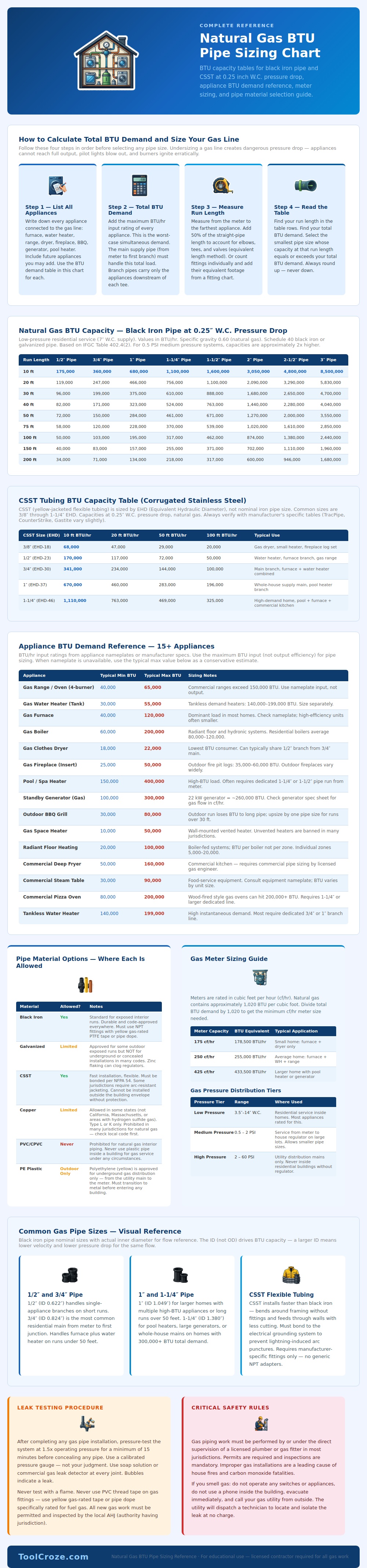
Determining the size of these pipes is no guessing game. It’s a step-by-step process that begins with a list of all gas appliances throughout house. This includes the obvious ones, like furnaces and water heater, and also lesser-known energy hogs such as pool heaters, standby generators, and outdoor grills. For each piece of equipment, examine its nameplate input rating. This number is the peak amount of energy required if they’re all running at once. Add these numbers together and you has the total load that your main supply line must handle.
With that overall demand in hand, second key measurement you’ll make is the longest distance between the meter and any appliance. And here’s the catch: The “distance” isn’t necessarily a straight line. Consider valves, tees and elbows, all of which adds some measure of resistance along the flow path. To compensate, simply tack on 50 percent to whatever distance you measure. That updated figure can be used to work out the amount of friction that gas has to overcomes during its journey to an appliance.
But it’s important to note that the distance/pipe size relationship isn’t linear: It takes only a ten-foot run of black iron (half-inch pipe) to transport sufficient BTUs for a single dryer. But stretch the same half-inch line over fifty feet and you may find yourself inadequate to handle both your water heater and furnace. As the chart shows, there’s an amount of pressure loss at any given length, so that capacity diminishes with distance. To keep adequate flow, you’ll have to step up in pipe size to three-quarter inch or even one-inch pipe for longer runs. That’s why main trunk line tends to be larger then any of the branch lines supplying individual appliances.
The right materials matter as well: For exposed interior runs, good old black iron pipe is still the norm due to its common use in building codes and durability. If you’re going fast with bends, flexible corrugated stainless steel tubing installs more quickley (it flexes over framing without needing lots of fittings). But because lightning can arc through electrical systems and burn holes in the CSST, there are special bonding steps that needs to be taken with this type of run. Consult your local rules about which materials can be used. In some areas, certain piping materials is banned for safety purposes.
The bottom line is that correct sizing for gas saves money on utility bills and reduces the risk of problems down the road. Under-sizing your line will result in appliances running poorly, costing you money and creating risky incomplete combustion situations. Proper calculations of load means everyone gets the amount of fuel they require to do their jobs effectively and safely.
If you’re not sure about the math, call a licensed contractor to confirm measurements and see if they meets local code requirements. A little upfront planning now saves you money (or worse) later. Who wants to be explaining why they have a cold home because of a hose that was just a bit too small? You should of planned better!
