
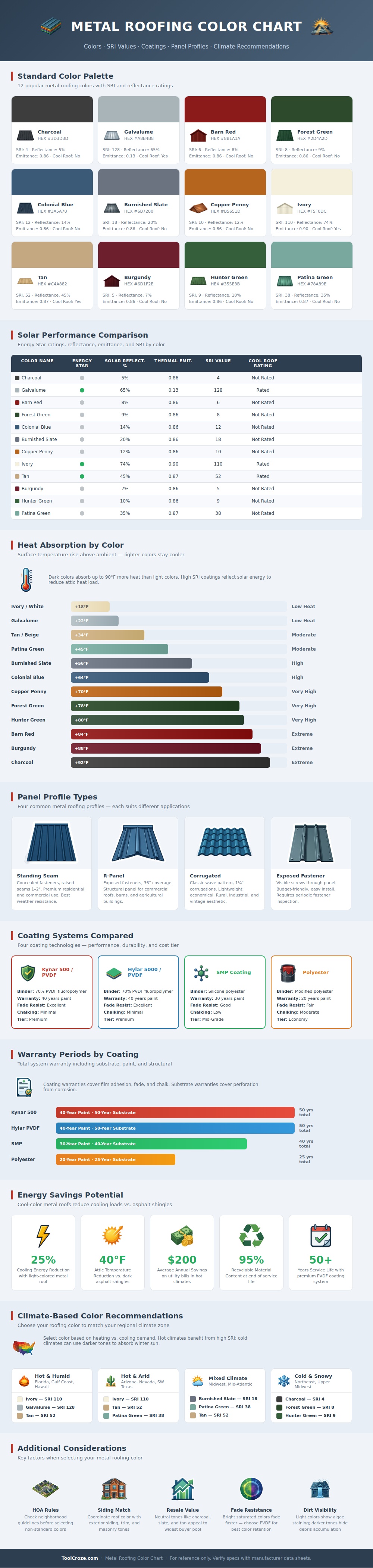
When most homeowners select their roof color, they do so as if they’re selecting paint to complement walls. “Does this match my siding? Will I look good from the street?” Those are fair concerns. But you’re missing the forest for the trees. A metal roof isn’t simply a cosmetic element. Every single day, it’s interacting with the sun and acting as a giant heat exchanger.
Your roof color impact your HVAC usage. Does your attic turn into an oven during July or stay somewhat tolerable? This chart (above) explains it all: it breaks out each color shade and shows its performance on solar emittance and solar reflectance. Look at the sharp difference between the lighter colors vs. These are the darker colors. Lower numbers, like Barn Red or Charcoal, absorb much more solar energy; while the upper numbers, such as Ivory, bounce most of the suns rays right back out.
Why Roof Color Matters More Than Looks
Why does that matter? Because when your roof absorbs solar energy, that heat sink into building. A roof that soaks up sunlight (like a sponge) will cost you more money in cooling bills in your home. Think about it: if you live in a hot climate, you’re basically paying extra each month for AC if your roof is dark.
Comfort is not the only factor. It’s about longevity as well. As metal roofing panels absorbs heat, they will also expand. At nighttime, as they cool back down again, they will contract. Over time this process of expanding and contracting places stress on your roof’s seams and fasteners. A cooler roof stays more consistent in shape over time.
Sure, you can go cheap and choose a dark colored roof to save money up front, but you may very well be sacrificing short term savings for long term maintenance headaches. The secret is largely psychology. Instead of basing our color choice on performance (at 2 in the afternoon when the sun is shining the hardest), we typically choose based on aesthetics (how it looks at noon).
This also plays heavily into equation of coatings. Not all paint is equal. Standard polyester paint will chalk and lose its luster much faster than premium fluoropolymer coatings which protect from both chalking and fading. The most beautiful looking roof may be a bright red for three years, but before you know it it turns to a dull brick color.
This is where warranty comes into play. Find products with good paint warranties. Some of these roofs carry a four-decades guarantee because the chemistry truly holds up to UV light. If the manufacturer only stands behind their finish for twenty years, they’re admitting the color will degrade significantly by then.
Another factor that determines the final function and look is the profile of the panel. For high-end residential construction, standing seam roofs conceals their fasteners under raised seams to create a clean, structured look. Economy versions (also called exposed fastener) need occasional maintenance… The screws will loosen over time and must be checked and tightened as needed.
Your choice in panel profile also affects visual weight. A standing seam appears sleek and moddern. A corrugated panel evokes a more rustic, agrarian feel… Perfect for shops or barns. It has a practical, honest feeling. Either is great at keeping out the rain, but conveys a different message to visitors and passersby.
In the end, this is one of those instances where climate matters more then looks. For example, if you have a brutal summer (such as the Gulf Coast or Southwest), then light colors aren’t just pretty but are also practical. They’ll reflect heat while helping to ease the burden on your air conditioning systems. On the other hand, if you live in a cooler climate where heating is your biggest expense, dark colors can help. They absorb the sun’s warmth during the winter months, which can save you money.
It’s really just a matter of finding the right balance of getting heat when you need it most (in the winter) versus staying cool when you want it most (in the summer). As such, most folks in these mixed climates move towards middle tones, think slate or tan. It is a reasonable compromise. Neutral is also best for resale. Not all people are on board with bold color. Something that you think is a bold statement may appear to potential buyers as an eyesore.
Neutral colors appeal to more people and generally retain their value longer. Your roof isn’t a temporary decoration; it’s a permanent part of the home structure. Let it frame the home while not overpowering it. Metal roof color is about physics, not fashion.
The sun doesn’t give a damn what looks good to us humans. It beats down upon whatever we show it, regardless of whether it’s trendy or not. We have a choice: pick a metal roof color based off its physical performance properties, like reflectance, then match them to your regional climate patterns. Let the performance specs go first; let visual appeal be second fiddle. You’ll be comfortable. You’ll save money.
