
It’s cold outside, so you light your fireplace. You only find out that your wood pile isn’t dried yet. No smoke goes up the chimney; just curling clouds return in the room. What a waste of effort and time! What was the cause? It is typicaly poorly prepared fuel.
Most folks purchase firewood by cubic foot only (they throw logs on a truck), never thinking about density, moisture content, or amount of time they’ll last burning. Once it’s ‘dry enough’ to spark, they assume it will burn same as any other piece of wood. That’s costing you both comfort and money.
How to Choose Good Firewood
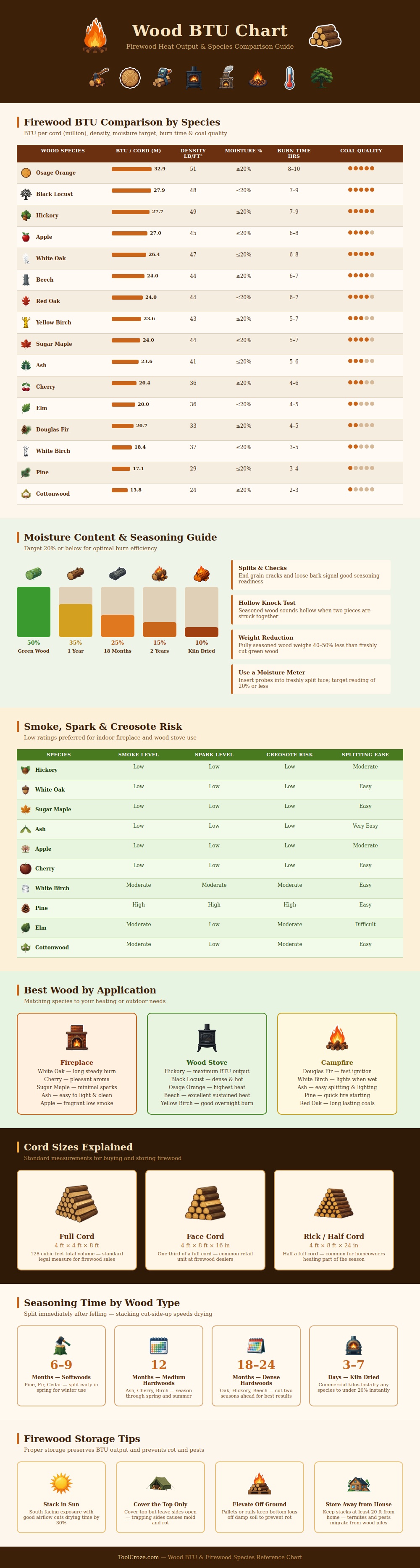
Species vary wildly in their heat output. It sometimes double from one type of tree to another. If you’re storing firewood for winter use, such as at a campsite or even to heat your home, knowing about BTU ratings makes sense. It also will change what and how much wood you purchase. A higher BTU mean more heat energy is released per unit of volume.
At the top end of the list are dense hardwoods like Black Locust and Osage Orange. Compared to softwoods like Cottonwood or Pine, they pack far more energy into a given cord. The difference could not been greater. A cord of lightweight softwood will burn faster and less hot then a cord of denser hardwood. In fact, the latter may last twice as long, meaning you need only half as much wood to make it through next cold snap.
How long it burns are almost equally important. Ideally, you’ll find some wood that maintains its coal bed through the night, so you aren’t waking up at 3 AM to reload the stove with logs.
Efficiency goes down as moisture goes up. By weight, green wood contain up to fifty percent water. Before it will produce any useful heat, you must first boil all that water out of the wood. That’s energy wasted that could of been heating your livig space. And in addition to wasting energy, you’re generating creosote, sticky, tar-like gunk that coats your chimney liner and represent a large fire hazard. The ideal moisture content for burning wood is less than 20 percent.
How do you check? You don’t need to buy some fancy tool: Just give a log a sharp axe blow; if it rings (a hollow, clean sound), it’s dry. If it merely thuds, it’s wet. Check for deep cracks or “checks,” which show where the outer part of the wood lost its moisture but the inner part hasn’t yet let go. Finally, does bark come right off in your hands? If so, you’re probably good to go.
How you store it: Storage strategy makes or breaks quality of your fuel. Don’t stack wood on the ground, where it will be inviting pests and rot. Before you light a match, rot and other degrading factors has already gotten at the wood. By stacking on pallets (to elevate the pile off the ground), you keep air circulating under it and protect lowest logs from soil moisture. Next, cover the top to shed snow and rain, but make sure sides remains open to vent. Wrapping traps humid air and inhibits inner wood from drying out, creating breeding grounds for mold. Placing the woodpile in full sun will speed up natural seasoning.
Choosing the right wood species can save you a lot of hassle. Dense hardwoods burn steadily and will maintain heat throughout the night (great if you’ve got a high efficiency wood stove). Easier to light varieties such as Birch and Ash is better suited for outdoor fire pits or traditional fireplaces where lighting the fire is a priority. Once lit, throw in some Oak or Hickory to keep the blaze going.
Balance is key here. You need enough structure to promote air flow in the fire box while maintaining some degree of density to trap heat. Burning subpar firewood that burns too quickly or produces insufficient warmth are an expensive mistake in the end. Spending a bit more time on choosing the right firewood saves money over the long term and increases comfort levels, especially during those frigid winter nights.
When the storm hits, there’s no need for constant attention. The flames remains bright and steady, chasing away the chill.
