
Before buying lumber for your next project, think about its hardness. Hammering on pine might dent it. It’s just not durable enough. Too often, it’s not a matter of cost but of what will work for job. A lot of us purchase wood items based off catalog photos. That’s good; looks is important. But functionality holds up the furnitures and floors. Knowing Janka hardness scale makes shopping different: it becomes an engineering choice rather than a style one.
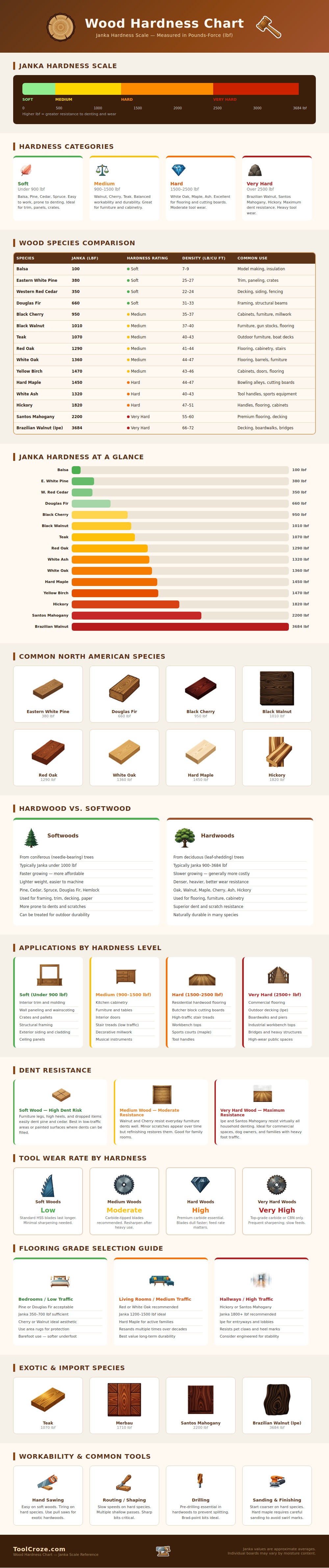
Species are rated according to durability (resistance to wear and dent) on a scale known as Janka. It’s calculated based off the pounds of force required to push a steel ball one-half inch deep into wood. Softwoods such as cedar and balsa will be toward bottom of that list. As you know, these are popular woods for trim and framing because they’re easy to work with. Their fibers aren’t densely packed which means they’ll sand fast and cut clean. But again, avoid using them in areas where people walks often. Softwood floor can have a permanent dent from a chair leg, for instance, because their fibers compress when pressed.
How to Choose Wood Based on Hardness
In the middle, we has Walnut and Cherry. Many furniture makers find this level of hardwood perfect because it stays very durable while still offering a great grain pattern. The Cherry also has added benefit of aging and getting darker instead of appearing damaged. It is a great choice for dining tables and cabinets. Not super durable to heavy use (think kids tugging on their toys or dogs jumping up on the furniture) but medium hardness woods like walnut and cherry will be fine day-to-day. People tend to buy medium hard wood in places that is abused heavily and then notice some wear within a year’s time.
Harder woods like white oak & maple also alters the machining needs. Both are common hardwood floor species due to their durability. Maple is a long term investment for an active family. It is dense enough to be sanded thousands of times. Oak also has great durability but with more character in grain. The trade-off is that tools dull much quicker. Sharper bits is needed or you’ll get tear out. Better equipment are required but it stands up to everyday life on the surface.
At the very top of the scale are exotic hardwoods such as Brazilian walnut. It’s practically indestructible. Because it is resistant to insects and rot, it can absorbs enough physical abuse to be used outside your home, not just inside. It’s the stuff builders use outdoors on decks and boardwalks. Unless you’re constructing a commercial grade workbench, using it inside seems like overkill. It’s heavy and dense, not helpful for hand machining, and because it’s scarce so is the price. You should of considered that it offers maximum resistance, and you get what you pay for.
Select wood based on type of movement in the house. Softwoods are fine for bedrooms (low traffic + rug protection). Entry ways/hallways require the hardest woods (handling dirt, pets & shoes). It’s about more than beauty. Think about how it’ll fit into your lifestyle in five years. Is a slight ding okay on that rustic coffee table? It is no big deal but it will be annoying when you walk all over it daily. Consider the amount of abuse it will take, then make the cut.
