
In any machine shop there’s a certain sound that means disaster. It is not the sound of things crashing. Instead, it is a high-pitched whining tone followed quickly by scent of molten metal and an “oh no” moment when you realize you’ve fried a previously good end mill.
Novices like to point fingers at tool maker and hardness of material. In reality it’s almost always far simpler and more easily fixed. Chances are you either fed too slowly and spun too fast (or vice versa).
How to Choose the Right Speed and Feed for Milling
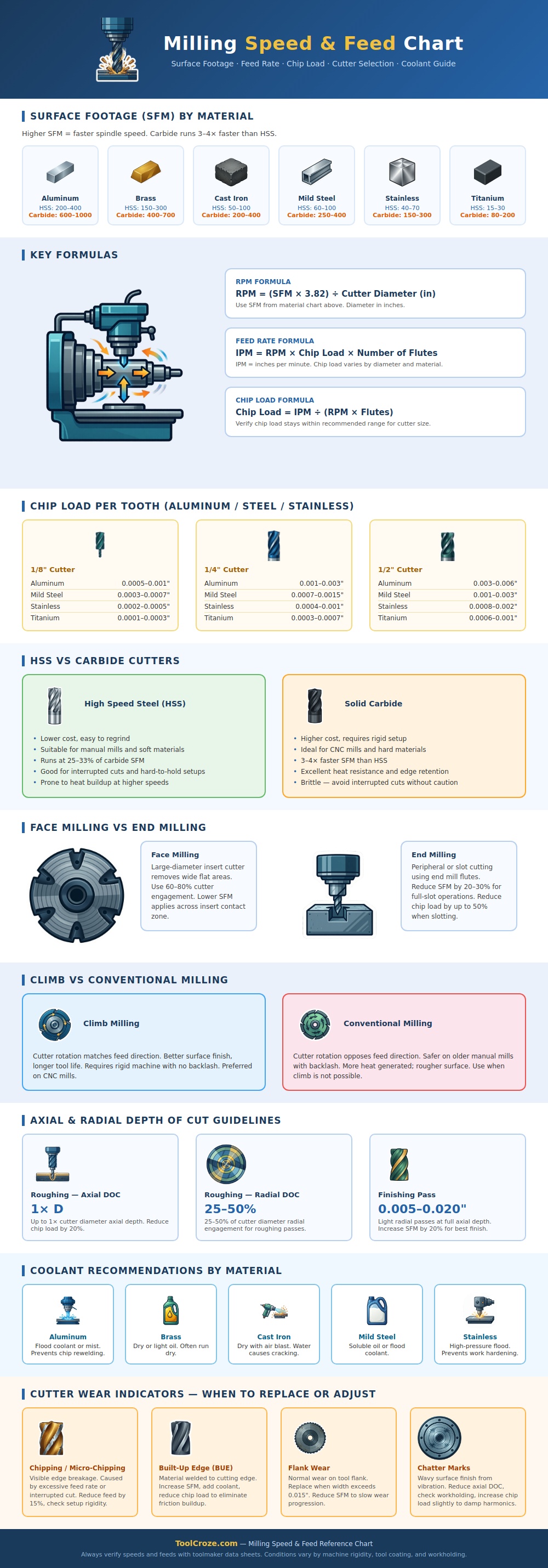
There is a delicate balance between milling speed and feed, getting it wrong will kill your end mills quicker then anything else. This is further shown in the chart above which shows surface feet per minute for various material combinations as well as tools.
Here’s where the huge difference between carbide and High Speed Steel (HSS) becomes clear. Carbide retains its edge at much higher temperatures allowing it to be run 3-4 times faster than HSS. Using a carbide end mill as if it were a HSS bit will not only reduce your end mill’s capabilities but also cause undue friction and lead to premature wear.
Because aluminum loves speed, it requires high surface footage rate or else the soft metal will weld itself to tool and clog the flutes. Conversely, stainless steel is a totally different beast. It produces extreme heat and hardens quickly so you need to slow way down. Trying to run stainless at aluminum speeds will result in immediate tool failure.
Chip load Most operators have trouble understanding how much to feed their machine. It’s odd and many machinists believe in reducing feed rates when using smaller tools. While that’s technically correct, they take the reduction far too far. A quarter-inch cutter needs to remove more material per tooth than an eighth-inch tool, proportionally speaking.
Starving a small end mill of chip load makes it polish work instead of shear off material. Polishing material cause heat generation and heat is the enemy of cutting edges. Refer to the chart to see exactly how much engagement per tooth becomes possible with increasing cutter diameters.
Feed your tools enough to produce confetti-like chips, not long stringy ribbons and not fine powder. Confetti means efficient material removal. Keep in mind that these adjustments depend based off what kind of milling operation you’re conducting. End milling in a slot is a high-stress event, while face milling removes large flat surfaces and goes pretty well with standard parameters.
The cutter has its entire load on the cut when it’s taking all of the flutes at once. In order to prevent breaking tool off, back down the feed rate significantly and decrease surface feet per minute by 20-30%. It’s best to make multiple light passes rather than going for an aggressive slotting attempt that results in broken geometry.
If you speak tool, then you’ll know how to read tool wear. Are you running too fast? Tool will tell you with chipped edges where you’ve been interrupted in your cut. Maybe there is not enough coolant or perhaps you are running too slow. You’ll see buildup where material has welded onto the flute.
Normal to expect some flank wear; just know when it reaches your eye, this baby’s not precise anymore. Want to get rid of the wavy chatter marks (on your finished surface)? Vibration means you need to change your feed rate slightly or adjust depth of cut.
The bottom line is that mill speed and feeds charts are just a starting point. They aren’t written in stone. They are a place to start if everything is going right. The art is paying attention to the chips and listening to the machine. Learning what your eyes tell you and relating it to chart will help you make money. You will make parts to tolerances every time while extending tool life.
Trust the numbers, respect the metal but always let your ear be your final judge. That high pitched whine should of never enter your routine again.
