
You are cutting a piece of steel. Sounds easy enough. Pick up your propane torch and get to work. Your flame spits, and as the metal glows red, it resists being separated from the rest of the plate. Because folks use it as a do-all cutting tip, the cut is slow and maybe a bit ragged. Because they don’t understand that the tip are the engine of this operation, and if matched incorrectly, its fighting physics rather than working with them.
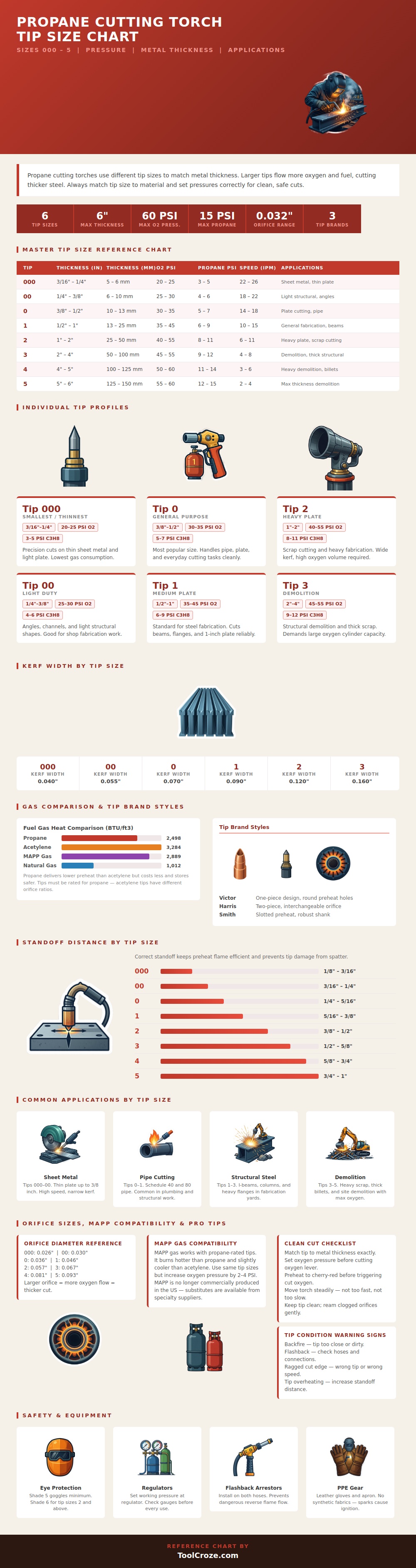
So how do all of those components relate? Exactly like this: This chart (above) is a breakdown of the relationship between oxygen pressure/propane settings/metal thickness/tip size. A bigger tip deliver more fuel heat and oxygen volume. You need the right nozzle for the job, and that is why the infographic is so useful.
How to Cut Steel with a Propane Torch
A small tip is precise enough for delicate applications such as thin sheet metal, whereas a big tip rips through heavy structural beam with brute force. Using a small tip on half-inch plate won’t work, the stream of oxygen doesn’t have enough mass to blow slag away from the kerf. Most shop owners are in the middle ground; those who tip zero or one is the workhorses. They use standard plate, angles, and pipe with no big dramas.
Here’s why propane is a great fuel. It burns cooler than acetylene, which means there is less chance of warping thin materials. It also saves money on heating up torch. The downside is preheat time are longer…. You have to wait until the metal gets up to temperature before you ignite it. That’s just the cost of doing business with a cheaper fuel.
Everyone talks about the heat of the torch but not enough about the pressure. Pressure matters more then you think. High pressure will throw off stability of your flame, while low pressure will result in slow cutting, poor edge quality (dragged), and an oversized kerf. You’ll notice from the data that tip size do matter: bigger tips requires higher pressures but not in a straight line. It’s a balance between the heat of the flame versus the flow rate, and nailing it results in clean cuts where no further filing is required.
There are also some little variables like standoff distance. If you hold your torch tip too closely, it will clog orifice with spatter. If you hold it too far off, the preheat flame will scatter. The chart in the guide gives a set distance by size, and the smaller the tip, the closer you have to hold it to the piece of work. Again, this takes getting used to.
You want closer so that you can control it right? Wrong! You actualy want enough space for the flame cone to build up properly before engaging the metal. The brand makes little difference. While there are subtle differences between the Victor, Harris, and Smith tips (round ports vs. The slotted preheat holes affect how they look, but they all work the same way because the physics behind them are identical. As long as you have a tip that fits your torch body and is rated for propane, then the tip will do just fine. Don’t worry about looks, worry about fit and flow.
There is no negotiating safety. To prevent a backfire in your regulator or cylinder, all hoses should of have flashback arrestors. Always use a minimum of Shade five glasses to guard against the sharp glare and sparks that can damage your eyes. These preventative practices will keep you alive; check your hoses for leaks prior to firing up and stay away from flammable materials.
The bottom line is to use the right pressure for the metal thickness. Use a big tip and high pressure on thick steel. Go light and use finesse for thin metal. That’s the chart, and practicing will give you the feel for how to interpret it. Try the suggested pressures first, then tweak a bit from there depending on your success.
Pay attention to what the metal sounds like. A good cut will be steady and consistent, whereas a poor cut will pop or hiss. Believe in that feedback and once you match speed, pressure and tip, you’ll find the torch isn’t working against you anymore, it’s just an extension of your hand, and cutting the metal is clean and straight across.
