
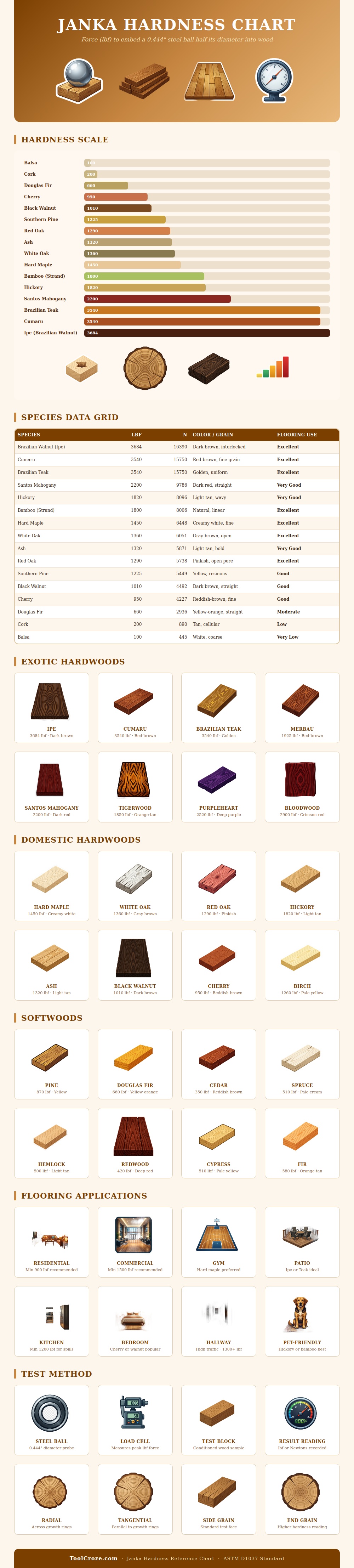
Dropping a cast iron skillet on the floor? Thud. I am holding my breath now, waiting to see if I’ve done damage to that beautiful wood flooring. Looking down… maybe there’s a dent in the hardwoods… or perhaps nothing at all. That split second moment of worry is exactly why knowing wood hardness are important when buying any type of board. Because not only does it matter aesthetically, but physics affect our living room every single day.
For example, the Janka test is done by pressing a metal ball halfway into piece of wood. How much pressure does that take? That’s your Janka number. The higher the number then the harder the material. The lower the number the less harsh the wood. The lower the number the softer and the more forgiving the wood will be on you. It’s an easy metric, but people don’t realy understand how it applies to materials.
What Is Wood Hardness and Why It Matters
Hard doesn’t equal strong. Soft can mean tough and hard can means brittle. Understanding the difference matter because how it wears changes based off those differences. When you examine domestic species you’ll notice that there’s a familiar hierarchy of familiar names. With a force of roughly 1290 pounds, red oak is smack dab in the middle, serving as standard by which all others are judged. Harder species, such as white oak and hard maple, scores higher on the toughness meter. What’s interesting about maple is that it’s been material of choice for gym floors. It makes sense because basketball players can slides along the floors without sticking, yet the material still resists impact.
Lower on the scale are cherry and black walnut, around 950 to 1010 pounds of force. As these woods age, they become beautiful with a rich patina. If you’re clumsy, however, you’ll notice dents. Beauty have its price.
If you step up to exotic hardwoods, the scales realy tip. With ratings above 3500 pounds, ipe and cumaru is at the top of the chart. They holds up to everyday household abuse. You could of probably roll a refrigerator over them without leaving a mark. But because they’re so dense, they present installation problems. Nails will split the wood. Sanding takes sharp tools. It’s not just about being tough; it’s also about working with it.
Not all floors require armor plating for a hushed bedroom. Softer woods such as cherry is warmer on bare feet, and are easier to refurbish when life gets out of hand. However, if we’re talking about softwoods, it’s a whole other ball game. Fir, cedar and pine tends to be in the 500 pound range (or lower) on the Janka scale. These are not great for your kitchen floor or your busy hallway with all those dropped items.
Does this mean they don’t have their place? No way. Those rustic craftsman and farm houses that incorporates pine into their design do so intentionally. The dent is part of the look. It’s recording the home’s history. Softwoods aren’t for people who demand a pristine surface. Softwoods are for people who want a lived-in home.
The first thing is knowing what type of species is best for you, and that requires a little introspection about who you are. Perhaps you have big dogs with claws, so hickory or bamboo may be better because they is abrasion-resistant. Maybe you move stuff around a lot, like on top of coffee tables; in that case, oak or maple will withstand the weight.
This breakdown by application is in the chart above. This shows the recommended minimum hardness level for a cozy bedroom compared to a commercial space. Pay attention to these guidelines. They’re there to save you money by preventing buyer’s remorse when your hallway floor show wear and tear while your bedroom stays as good as new.
Not all wood is created equal. Each species is a trade-off between price, performance and aesthetics. With the Janka rating in hand, you have the language to make that choice with purpose. You no longer guess what plank will hold up to daily wear. Instead, you chooses for performance. It doesn’t measure the aroma of saw dust, nor does it reveal the feel of sunlight warming your grain pattern. But, it informs you whether the flooring will last the many years of life you intend to spend inside its walls. Next time you’re out at the lumber yard, remember this scale and let the numbers inform your decision.
