
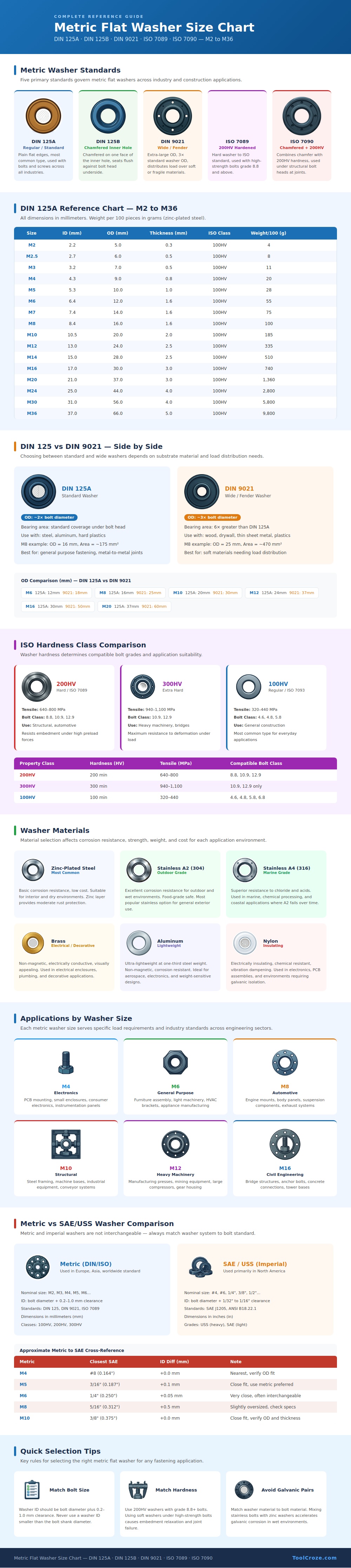
Flat washers are metric, so they appears as common items in your toolbox, yet incorrect selection will ruin a joint. The right combination of hardness and diameter ensure the fastener remains secure for many years. Get this wrong by even a little and the fastener come loose in mere weeks or months. Having an obvious size reference avoids all that.
As you can see from the chart, all of these standards are tied together regarding metrics and explain why they exist. For example, DIN 125A is everyday washer used as a flat washer. The DIN 125B is a chamfered washer on one side with bolt head sitting flush. DIN 9021 has a larger outer diameter to spread the load on softer surfaces such as thin sheet metal or wood. Then there are ISO variations with hardness ratings for bolts with greater strength. Comparing these differences make them clear and eliminates the guessing game when you need performance.
How to Pick the Right Washer
One thing that gets overlooked is hardness. In a furniture frame, using a grade 5.8 bolt with a regular 100HV washer is fine; embed it under a grade 10.9 structural bolt and it won’t hold. Embedding results in preload drop so the joint loosens. Match your washer to the bolt (not vice versa). The chart details which grades of bolts goes with which classes of washers.
The same goes for material selection. In dry or indoor applications, go with zinc plated steel which is inexpensive. If it will be around water, upgrade to stainless A2. If you’ll face chloride and salt spray, use stainless A4. Brass and nylon serve specialized roles where either conductivity or electrical isolation matter. This isn’t about remembering numbers; this is about knowing what your application is.
It’s the same with size selection. Tight places like enclosures holding light fixture or electronics use small washers, while larger ones take more load in structural steel and machinery bases. When outer diameter of a washer isn’t sized to fit the material below it, grabbing what’s on the bench usually backfires. By eliminating guessing, the chart present sizes from M2; M36 at a glance.
The simple lesson is to know your material environment and bolt grade before you start. Then look at the chart to verify both the right size and type of washer. This one habit eliminates most failures that surface weeks or months later. It should of been easier if people just checked first.
One thing that gets overlooked is actualy hardness. For example, DIN 125A is a moddern everyday washer used as flat washer. Comparing these differences make them clear and eliminates the guessing game when you need performance more then you think. The chart details which grades of bolts go with which classes of washer. If it will be around water, upgrade to stainless A2 or A4 based off your needs.
Tight places like enclosures holding light fixtures or electronics uses small washers, while larger ones take more load in structural steel and machinery bases. One thing is that metal surfaces is hard to manage. When outer diameter of a washer isn’t sized to fit the material below it, grabbing what’s on the bench usually backfire. In dry or indoor application, go with zinc plated steel which is inexpensive. It should of been easier to use luxurius materials, but they are expensive.
Comparing these differences makes them clear and eliminates the guessing game when you need performance. All of these standards is tied together regarding metrics and explain why they exist. The DIN 125B is a chamfered washer on one side with bolt head sitting flush. One thing that gets overlooked is hardness, it’s very important. Most people dissapears when the work get hard.
