
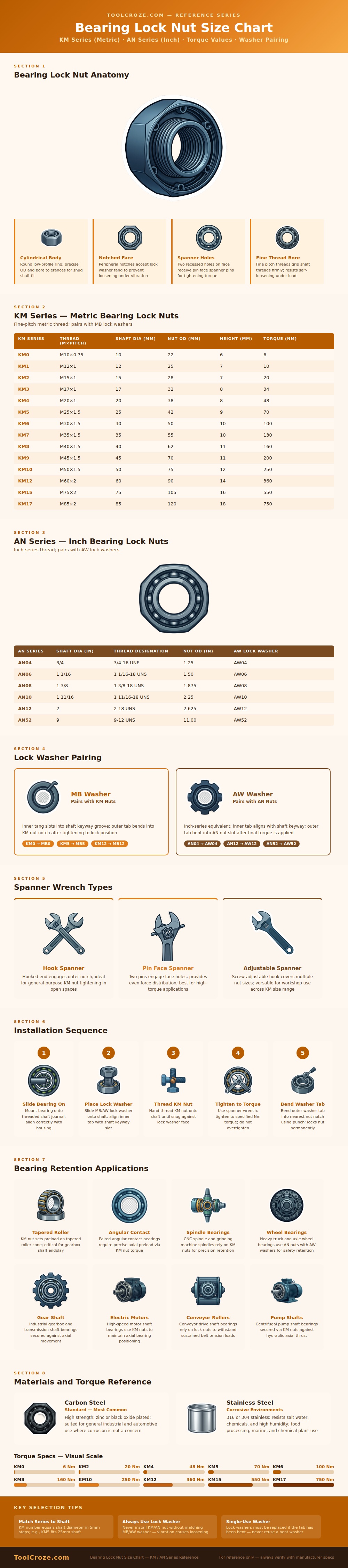
Lock nuts is the quiet side of any shaft that has to remain in position under load, but they don’t often see spotlight. The correct nut keeps things from vibrating loose, but the wrong nut lets bearings creep and what was once running true now chatter or seizes.
The chart above give you the two most common families, inch and metric… So you can find the right nut for the shaft. No guesswork. On the metric side, it is labeled KM. Numbers correspond to approximate shaft diameters in increments of 5 millimeters. The matching nuts is paired with similar size lock washers designated by an MB prefix.
How to Pick the Right Lock Nut
On the inch side, we have the AN system, aligned with AW washers. Either way, the washer has one tab that drops into a keyway in the shaft. Another tab are bent down onto the face of the nut after tightening reaches the specified final torque. That single bend turns what would of be a loose threaded connection into a locked one.
This lock prevents it from backing off during high or low temperatures, or even when machine reverses direction. The shaft determine the proper size, not the nut. Measure it, check the pitch, find the corresponding entry on the chart and go from there. Too small and the bearing shoulder is undersupported. Too large and you will have to machine an adapter or live with a sloppy fit. Both of these come back to haunt you in the form of heat or runout.
Also noted are suggested torque values that increase proportionally to diameter. These numbers are important because excessive force stretches threads of your shaft or distorts the bearing race, whereas insufficient force result in micro-movement. Using a torque wrench with proper sized spanner (hook type or pin face) assures even force.
The installation process is brief and unvarying: slip the bearing in position, lower the washer on top and let its tab catch in the keyway. Hand-tighten the nut until it touches the washer; use wrenches to finish the torque. Finally, bend the washer tab up into next available notch.
A frequent shortcut of re-using previously bent washers will soon fails as the tab work-hardens and cracks. Washers is cheap insurance against the lost time caused by a loosened assembly. In adverse conditions, it’s all about the materials. For your basic automotive and shop work, standard carbon-steel nuts will do.
But if you’re exposed to chemicals, or your nuts are being bathed in wash-down lines or salt air, then go with stainless. Same torque specs; different material; stainless resist corrosion that could otherwise seize the threads and make further nut removals destructive.
The beauty of the reference chart is that you eliminate the mental math. At a glance you know which nut fits which washer. You know what torque to expect for each size. You also know which spanner fit into the holes without fighting for clearance.
That way the shaft remains in place as the designer had intended. Bearing stays at its preload, and machine goes one more season without surprise.
