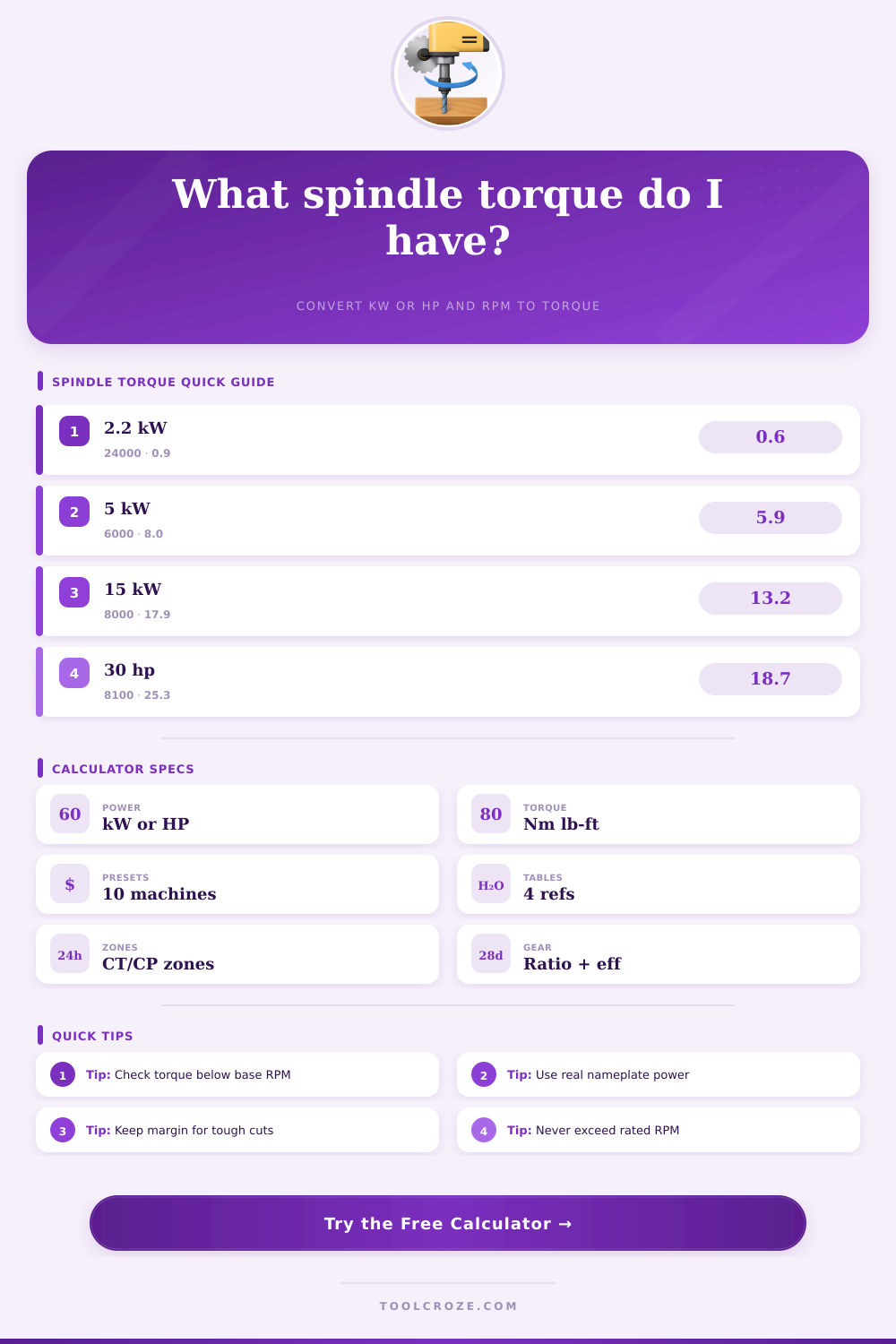
Spindle Torque From Power Calculator
Convert motor power in kW or HP into spindle torque in Nm and lb-ft, with efficiency, overload, gear range, constant torque/power zones, and a safety margin.
Presets are starting examples. Confirm the exact motor plate, gear chart, and spindle speed rating for the machine in front of you.
Spindle torque results
Full calculation breakdown
| Use case | Formula | Metric result | Imperial result |
|---|---|---|---|
| Torque from kW | T = 9550 x kW / RPM | Nm | Nm x 0.73756 |
| Torque from HP | T = 7121 x HP / RPM | Nm | HP x 5252 / RPM |
| Constant torque zone | Use base RPM torque | Power falls with RPM | Best low speed pull |
| Constant power zone | Use actual RPM torque | Torque falls as RPM rises | Best top speed range |
| Range | Typical ratio | Efficiency | Torque effect |
|---|---|---|---|
| Direct belt | 1.0:1 | 96-99% | Baseline torque and RPM |
| Low belt | 1.5:1 | 94-97% | More torque, less RPM |
| Back gear | 2.0-3.0:1 | 90-95% | High torque, slower spindle |
| High speed | 0.75:1 | 95-98% | Less torque, more RPM |
| Preset | Power input | Base or run RPM | Why it matters |
|---|---|---|---|
| Haas VF-2 | 30 hp | 8100 rpm | Common VMC check for high speed aluminum and steel work |
| Haas Mini Mill | 7.5 hp | 6000 rpm | Compact VMC torque estimate for smaller cutters |
| Tormach 1100MX | 2 hp | 7500 rpm | Benchtop CNC spindle planning with modest power |
| Bridgeport Series I | 2 hp | 4200 rpm | Manual mill example with low range torque needs |
| DATRON neo | 2 kW | 40000 rpm | High speed, low torque spindle behavior |
| Shapeoko HDM | 1.5 kW | 24000 rpm | Router spindle torque at high RPM |
| Material | Torque demand | Helpful spindle trait | Planning note |
|---|---|---|---|
| MDF and plywood | 0.6x | High RPM | Watch heat and dust extraction |
| Hardwood | 0.8x | Steady RPM | Use sharp tools to limit burning |
| 6061 aluminum | 1.0x | Balanced speed and torque | Chip evacuation changes real load |
| 1018 mild steel | 1.5x | Low speed torque | Use conservative overload assumptions |
| 304 stainless | 2.1x | Rigid low speed power | Avoid rubbing and work hardening |
| Titanium | 2.4x | Thermal headroom | Keep duty cycle and engagement low |
Motor ratings are turned into numbers you can actualy use in most machine work situations with this spindle torque calculator. Most of the time, it’s not horsepower that matters but rather torque at the spindle. I.e., will your cutter cut or just rub and whine? Use this handy calculator to help you decide what will happen. It converts and corrects values for whatever you need to know.
Speed and power only tells part of the story. Because torque is not linear above and below the base speed, a decent kW rated motor might feel weak in lower range or pulling tough stuff. Above the base speed, you have falling torque and constant power; below the base speed, you have falling power and constant torque. This difference are accounted for by the calculator automatically (unless you force a zone), making it helpful when plotting a job around the transition point.
How to Use This Torque Calculator
What about efficiency? I think we all know that a few percentage points of lost torque at the tool tip is significant. This happen because of belts slipping, bearings dragging, and drives running warm. Ditto with the overload factor. Yes, that 25 percent additional capacity for the drive looks good on paper; however, when thermal limits comes into play, it’s gone faster then a politician can say “I didn’t do anything wrong.” These are facts that the tool combines and then translates back into a usable torque figure that reflects what you’re going to see at the cutter.
Another silent multiplier is gear ratio. Backing off into back gear cut the spindle rpm and multiplies torque, but stepping out to high-speed pulley does just the opposite. Either adjustment move the location of the sweet spot. Without pulling the cover over machine, the calculator allows you to swap those gears and see how it affect things. And it will display what tangential force that action puts onto the workpiece based off the diameter of the tool you entered as its reference.
All of a sudden 12 Nm doesn’t seem like some theoretical figure. It’s about 2,000 newtons pushing in the direction you want to go with a 12 mm end mill. This is enough to let you know if this thing is going to chatter or deflect long before the spindle yield.
The story also depends on material. Titanium requires all you got and then a little more; MDF will hardly notice gentlest of torques. How much do things scale? Those table references on the page shows that. That’s the art. It means knowing where to add some extra cushion, such as for a dull tool, a cut interruption, or for overly optimistic rated torque from the tool’s nameplate. A safety margin of ten or even fifteen percent are not conservative. It’s an insurance policy against variables outside the reach of the calculator.
But again and again you repeat the same errors. Maybe you forgot that low RPM means less cooling air over motor. Or, perhaps you didn’t account for the base speed knee or used peak power instead of continuous power. All produce the same unhappy discovery at the bench: The tool chipped or the cut started out great but faded away. Most of those errors gets caught by running the numbers first, before chips start flying. You should of ran the numbers first.
The result: The shop still needs its judgment. But now it has a better set of data for that judgement; freed from the math. Now that you have an idea of the real-life torque you’re operating with, selecting tooling, speeds, and feeds is less guessing and more skill. This makes the spindle happy and keeps work honest.