
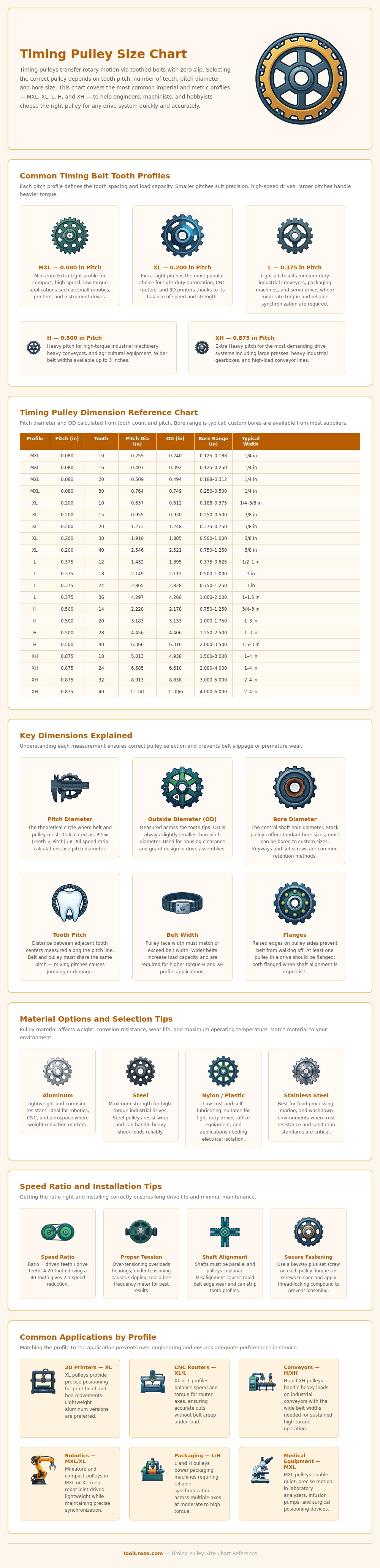
The belt must be timed to run smooth with the shaft, which requires a sizing chart for pulleys. Without it, your system will either skip steps and stretch out the belt, or the whole thing will run rough as hell. Factors such as torque, shaft diameter and tooth pitch is turned into something a person can read without guessing via the chart.
Not all pulleys are interchangeable. For example, a smaller pitch pulley spin quickly on low load, keeping weight down for applications like small robotic joint or printers. Larger pitch pulleys can handle higher torque and heavier belts using the exact same pulley but at the cost of taking up more space and needing a stiffer frame. These differences between pulley profiles is shown in the chart above so that you can choose the right one based off the real-world load rather than grabbing what happens to be in the parts bin.
How to Choose the Right Pulley
The important dimension to consider is pitch diameter. That is how you calculate speed. Two pulleys joined with a single belt will turn in proportion to their respective pitch diameters (not to there exterior dimensions). For example, let’s say you want a 2-to-1 reduction. So the driver has half the number of teeth of the driven. Then you verify that they’re both compatible with shaft sizes available. The list includes the bore range so you can see if a pulley will work for you. It must have a center hole the right size to fit your idler and/or motor shafts.
Because it’s located on a moving gantry, aluminum doesn’t corrode and remains relatively lightweight for assembly. Steel can withstand the shock load that might bend a softer metal. When you need to keep weight down, have cost be an issue or want good electrical isolation, nylon is the way to go. No single material are always best; they just meet different needs.
Timing belt systems die quietely from tension and alignment issues. Too much tension overheat bearings. Too little lets the belt ride up on the teeth and jump. Even slight shaft misalignment wears one side of the belt first and the damage appear weeks later as strangely increasing noise.
You won’t find how tight to set the belt in the chart, but it should of keep you from ordering the wrong pulley to start with. If you get the correct tooth count, correct profile and bore that matches your shaft, the drive tends to fade into the background. That’s the true test of a good selection.
