
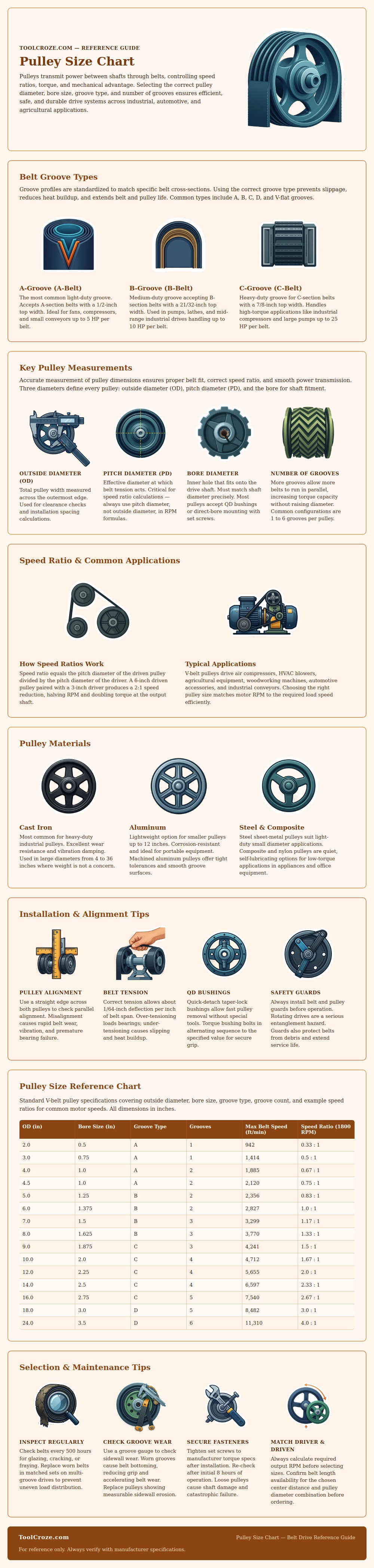
With belt drives you select the correct pulley size by matching the groove shape, pitch diameter, and belt section to the actual job. Usually this selection isn’t recognized as incorrect until after the belt has slipped or motor turns too slow under load. Then you realize the pulleys was being asked to do more work then expected.
Matching components to real task makes all the difference in having a good smooth system rather than one that wears out prematerly and overheats. The magic number in all these calculations is pitch diameter, the place the belt rides and where torque gets transferred across. Pitch numbers is used in speed ratio formula, though outside diameter is always slightly greater.
How to Choose the Right Pulley Size
Different section of belt fit into specific groove widths and angles; see chart above. That’s important because if a belt does not sit correctly (too high or too low) it loses its grip and contact area in the groove. A groove of 34 degrees are fine for A and B sections. Narrow wedge belts requires a slightly steeper angle to stay tightly wedged under tension. A poor match here become obvious through shorter belt life and heat long before the sheaves themselves fail.
The bushing style and bore size will impact install more than actual performance. It affects if you can even pull pulley onto shaft without wrestling with it or pulling bearings apart to get it on. Because real equipment doesn’t typically present perfect access, there are taper lock and quick detach options.
The next practical question after mounting your pulley is how many grooves? A single groove is for a small motor/fan use, while most anything pushing water as in pumps/compressors would be better off with two belt sharing the load. As demands increase and power demand climbs, we see three grooves or more as belt heat and stretch become real constraint.
Just like the conditions match approach used in materials selection, there isn’t one “best” material; there are only materials that work well together or not so well. For standard industrial use, cast iron is the go-to material due to its ability to dampen vibration and hold up. If you’re looking for something lighter and faster (or if your application is portable), aluminum helps trim weight by reducing friction. And if loads are modest enough such that cost is an issue, like on fractional horsepower appliances, then stamped steel keeps things affordable.
It’s never a dramatic decision; however, when a poor choice made, it appears first as excess weight, followed by premature wear. If you understand how to select pulleys as part of a system, it’s not just about making a parts list. It is an exercise in finding where the “real” pay-off lie.
Knowing the groove specs reveals actual belt section to use for transmitting power while avoiding slipping or running hot based off the speeds of the driver and driven. That’s laid out in the chart above, so you can go directly from the motor nameplate to the sheave order without having to guess at critical dimensions. This avoids most of the vibration and heat issues that crop up weeks later. You should of checked the specs first.
