
If you’ve ever faced a broken washing machine or lawn mower and asked yourself, “Which belt do I need?” you’ll know what I mean: It’s frustrating when it doesn’t fit rightly. Every day equipment rely on fractional horsepower belts (also known as FHP belts) for their light-duty chores. These look like simple things, yet improper sizing by length or section result in premature failure, slippage, or squealing.
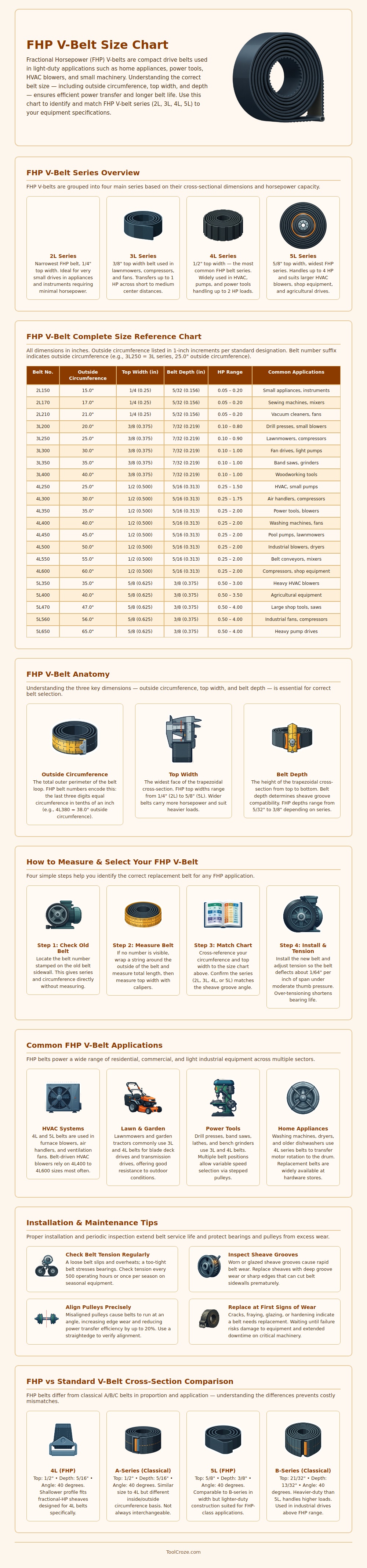
So, we divided the choices up into four categories (shown in the infographic above). They vary primarily by thickness and width. Thin belts is for small, dainty tools and motors; wider ones can handles slightly more weight but still keep it pretty light. Each category also has its own grove angle where they reside. Because each section sits in its own groove angle, a belt from one group will not seat properly in another.
How to Choose the Right FHP Belt Size
Most of your sizing errors are avoided before you pull out tape measure. The number system is the key. Letters shows what section (see above) and numbers on the outside are total length in tenths of inches around circumference. So after figuring out how to read that format once, then you can look at any belt in your drawer and immediately know its real size without having to pull it all the way out and stretch it over a ruler. A couple more common ones is laid out in chart above and before long reading them will become easy instead of something you fear doing every time.
It’s not just about length. You want the proper diameter of the pulley below you. Too small a pulley puts the belt in a tight turn that it wasn’t designed to do, and it start wearing out the cords internally. The infograph shows what minimum dia should be at each section. That’s why you don’t typically see many folks swap a 4L on a 2L pulley and expect everything to go smoothly.
The true benefit with FHP belts is their flexibility. Because they are so thin, they can flexes around tiny little pulleys like you find in handheld tools and home appliances. It isn’t necessarily suited to high horsepower which is why you won’t be seeing them on big industrial drives. You match the belt to what it is realy going to carry and keep both the belt and motor running properly.
The right size isn’t everything, proper installation practices is equally important. A correctly tensioned belt runs true, not too tight to strain the bearings, and not too loose to slip. Pulleys properly aligned eliminate side wear which shortens belt life. Both can be checked in minutes, saving you hours of downtime later.
Next time a belt comes off, check it for length code and section letter printed on it before you start disassembling half the machine. You should of used those details and the reference above to get right size belt for your order.
