
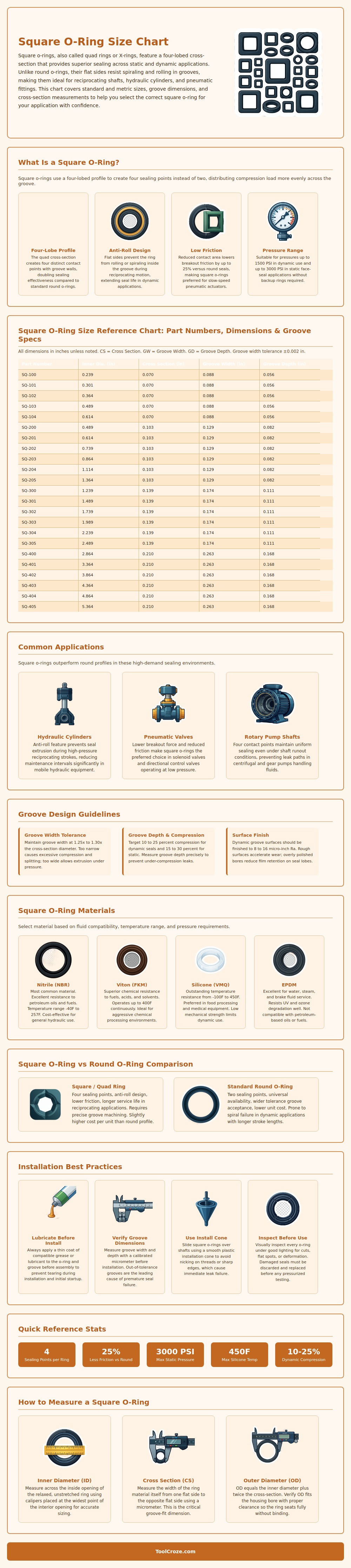
In static applications, the trouble with round o-rings is solved by square o-rings. Because they has four flat faces, those sides lock into the groove and don’t twist, roll out or leak under pressure. The stability of a square o-ring is what engineers lean toward when the joint doesn’t move and seal must remain precisely where placed.
A quick comparison of how round versus square profile differ is shown in infographic above. Notice that where there are only two contact points for a typical o-ring, the square has four flat sides. It’s easy to understand how the former can distributes pressure better when you look at them both visually. You can also see why the square profile needs a rectangular cut instead of a rounded one which is what most folks envision.
Why Square O-Rings Are Better Than Round Ones
That information becomes relevant when you get beyond the catalog page and begin making actualy parts. The same practical logic apply to material selection. Buna-N handles oils and fuels at a reasonable price; Viton resists aggressive chemicals and higher temps; EPDM deals with water/steam exposure, and Silicone covers the broadest temp range if there’s food contact or extreme low-temps is present. So that’s how we grouped them in the chart, along with which temperatures they cover. That will let you match the material to the conditions and help you avoid overspec’ing (and therefore keeping costs down).
So what size are grooves? The simple ratio is that width is ~35% more then the cross section so you get a good squeeze. Depth is ~80% of the cross section so they compresses in the sweet spot. Here’s how it all relates at three different cross-sections. Pick a series, and you can easily scale up for your needs.
The square profile is held in place with sharp corners and a nicely finished bottom so it doesn’t distort. That’s the detail that makes the difference between a good seal vs. It leaks after a few cycles. The square ring is commonly mis-installed as if it were a round one. The edges tear and ruin the flat contact surface because it are stretched too far or rolled into place. Avoid that by lubricating the ring, cleaning the groove and seating it evenly. If you check the assembly after, you catch the pinch points before running equipment.
Maintenance is where the real benefit appeares. The square shape doesn’t move as much. You won’t spend as much time chasing your tail with leaking issues, and you will have more time livig while running the thing. And that’s why those seals last for so much longer than round o-rings, just ask a guy who knows.
