
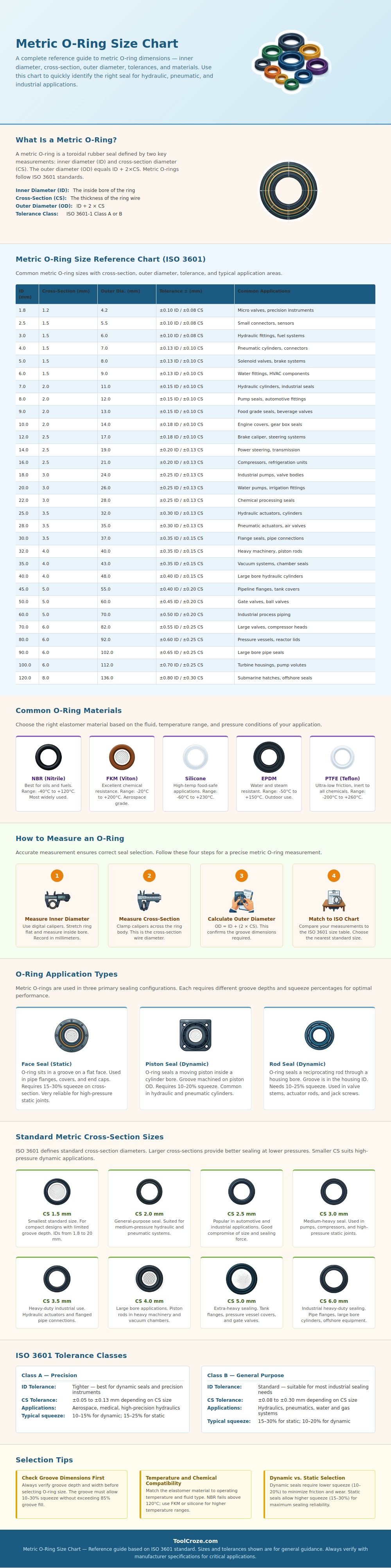
The correct size O-ring will either fix your leaking issue or make it worse. While there are many things that go into using an O-ring as a seal (including material), in this case size is everything. Just a tenth of a millimeter difference mean more or less compression of the rubber against the sides of the groove. The amount of compression form the seal itself. Too little and you’ll have a gap; too much and the material will actualy be pushed out from the pressure.
Each metric O-ring are defined by its cross-section thickness and its inner diameter. That means you know the outer diameter from just those two figures, and if you look at the relationship between them you can tell if it’s going to fit nicely into some groove or not. Those dimensions for thousands of different sizes, everything from tiny little precision instruments to huge industrial-sized valves, map onto this reference chart (above), along with the tolerance ranges for each one. That comes into play when your application involve something holding high pressure or cycling frequent.
How to Choose the Right O-Ring Size
The choice of material also matter. While nitrile is still the go-to for most shops due to its ability to handle fuels and oils over a wide range of temperatures, fluorocarbon resist higher heat and more aggressive chemicals, making them common in automotive fuel systems and aerospace applications. Water and food grade applications with wide temperature variations but milder chemical exposure use silicone or EPDM. PTFE falls into a class all by itself as it resists just about everything and has virtually zero friction, but needs to be installed different than the elastomeric materials.
Most sizing errors comes down to measuring your ring properly. Lay it out, stretch it open, and take a measurement of the inside diameter using a set of calipers. Then take the actual thickness of the rubber and add that amount twice (twice because there will be two layer). That’s the outer diameter. Now you can check to see if the ring will fit into the groove you plan to use it for. This table arrange it all in a way that gets you from taking the measurement to finding your size quickly, no guesswork required.
The caveat here comes from application type. With a static seal (i.e., a seal on a face), more percentage squeeze is acceptable because there’s no movement. A dynamic seal like a piston or rod need less lubrication because wear and friction is reduced over thousands of cycles. The reference material above categorizes all these configurations in plain English to help you match your ring to the action in which it’ll be used.
Sizing should of never be a guess. Instead, make it a quick checklist for the real payoff. First, check groove depth. Next, verify elastomer for temp and fluid. Lastly, compare dimension against chart. This prevents weeks of leaky frustration and avoids another disassembly due to wasted time on equipment.
