
A staple gun is a tool that you hold in your hand to fasten materials together. When you squeeze the trigger of a staple gun, the staple gun will drive a fastener into the materials that you are attempting to fasten together so that the two piece of material lock together with a click. You may use staple guns to reupholster a chair, to insulate an attic, or to build a set for a school play.
The correct staple gun will make any project that you complete with a staple gun seem easy. However, as there are many different color and sizes of staple guns available in hardware stores, it can be difficult to find the right staple gun for the job that you are completing. By understanding the different types of staple guns, you will not purchase a staple gun that you’ll never use.
The differences between staple guns include the power source for the staple gun, the type of materials that the staple gun is to fasten, and the amount of force that the staple gun will use to fasten the materials. For instance, some staple guns are created to allow for delicate work with the items to be fastened, preventing them from splitting the wood or the fabric. Other staple guns will have more power to fasten staples into thick plywood or roofing felt.
Each type of staple gun will be created to solve a specific set of problems for the customer, which is why professionals will often have more than one staple gun in their vehicle. If the person selects the wrong staple gun for the job, the person may waste time, damage the materials that are to be fastened, or even injure themselfs with the staple gun. Manual staple guns are the most common type of staple gun for those who is performing home projects or trade work that does not require a great deal of force to fasten the materials together.
Different Types of Staple Guns to Use
1. Manual Staple Guns
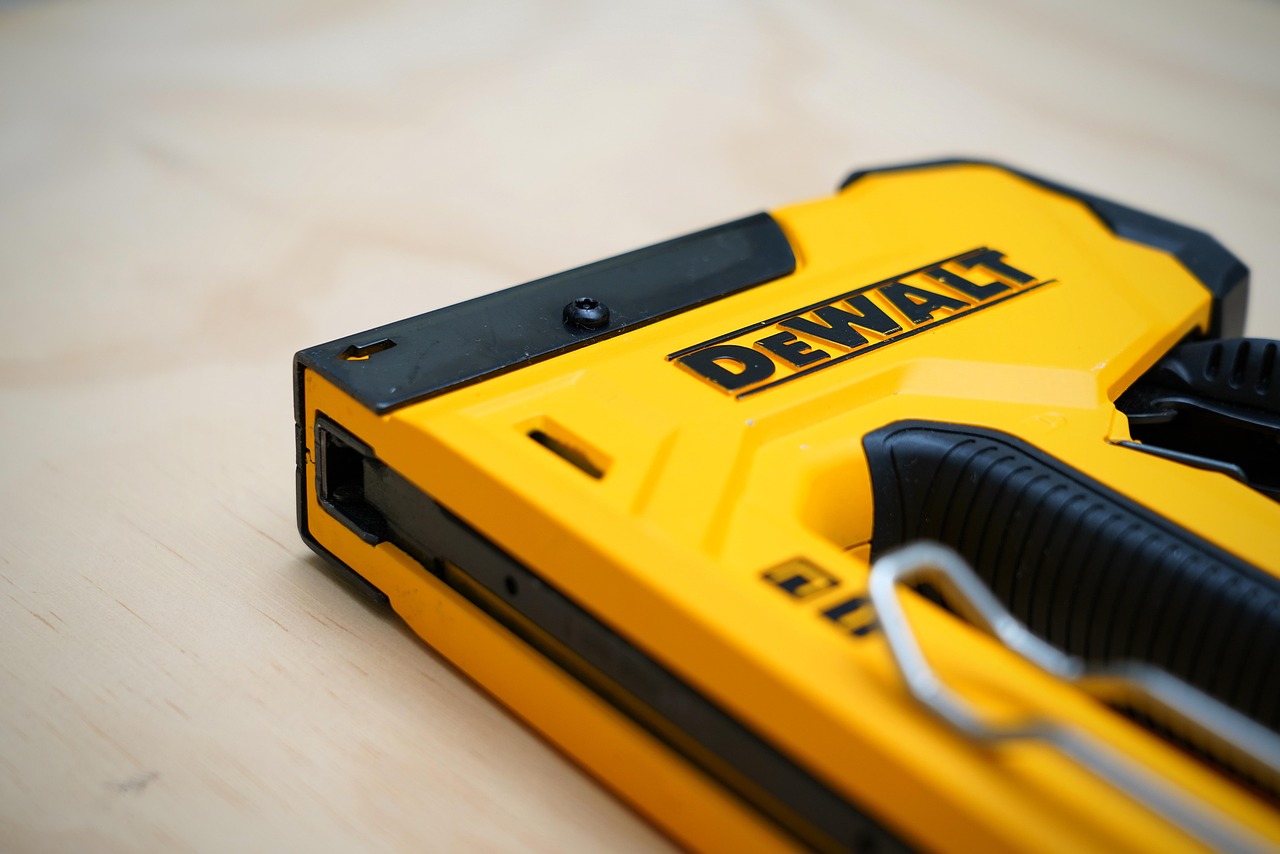
Manual staple guns require the person to provide the power to the staple gun to fasten the materials together, which allows the person with the manual staple gun to have excellent control over the items with a gentle touch. Manual staple guns are simple tools, inexpensive tools, and do not require batteries or air compressors to provide the power required to fasten the materials together. Manual staple guns can be used to fasten upholstery fabric, craft projects, perform insulation work, and even perform trim molding tasks.
The manual staple gun utilizes a spring-loaded striker that can be released from the tension that the materials or workpiece being fastened together created. These manual staple guns provide direct feedback to the person that is using the tool. For example, if the person is attempting to use a manual staple gun for upholstery fabric, they will be able to learn the amount of pressure that the fabric require to fasten the materials together and avoid forcing the staple gun too deeply into the soft pine wood.
Most manual staple guns will accept standard quarter-inch staples or three-eighths-inch staples, though there are also narrow manual staple guns manufactured for tasks like picture framing and screening installation. The tradeoff of using manual staple guns is that the persons hand will tire after fastening a few dozen staples with the tool. For projects that require fastening large areas of items or for overhead work, manual staple guns will become difficult to use.
Still, manual staple guns are often the only tools that are required to perform small projects around the house.
2. Heavy Duty Manual Staple Guns
Heavy-duty manual staple guns are manufactured with longer handles and reinforced gun frames to allow for the application of more force with the staple gun. Heavy-duty manual staple guns are simply larger versions of manual staple guns with a reinforced handle that allows them to fasten longer staples into thicker materials like underlayment, roofing felt, or thin plywood.
The extra advantage to manual staple guns is that a cam or compound link inside the handle of the tool allows one squeeze of the handle to provide more striking force than the standard manual staple gun. Heavy-duty manual staple guns are used for fastening projects that require more force than a standard manual staple gun will provide but require the avoidance of the noise and the setup required for pneumatic staple guns. For instance, these staple guns can be used to install vapor barriers for crawl spaces or to attach carpet padding.
The downsides to the use of heavy-duty manual staple guns are that they are heavier than standard manual staple guns as well as that the long handle can be awkward when being used in a tight corner. Additionally, if hundreds of staples are to be fastened, the forearm will become tired the next morning after using the staple gun. Cordless electric staple guns are a type of staple gun that provides convenience to the person using the tool by eliminating the need for a bulky air compressor.
3. Cordless Electric Staple Guns
The staple gun has a battery that is recharged and provides power to a motor that drives a spring or a flywheel that drives the striker of the staple gun. The electric staple gun will fire almost instantly when the trigger is pulled. These types of staple guns are used for tasks like installing insulation, attaching housewrap to structural members, or sheeting plastic over greenhouse frames.
Cordless electric staple guns also have a contact safety mechanism that prevents the staple gun from firing unless the nose of the tool is pressed against the workpiece. The power that cordless electric staple guns provide is different than the power provided by manual staple guns. For example, no measurement of the amount of pressure that must be provided when using the tool is required since the motor will provide that force.
Most cordless electric staple guns will accept many different size of staples as well as brad nails. The batteries that power the motors will last several hundred shots, but cold weather will reduce battery life. The delay between pulling the trigger and the firing of the staple gun is a complaint about cordless electric staple guns; however, users will adapt to this slight delay and the speed at which the cordless electric staple gun will fire will be faster than any manual staple gun.
Pneumatic staple guns are among the most common types of staple guns to be found at job sites where professional contractors perform their work.
4. Pneumatic Staple Guns
Pneumatic staple guns are very powerful tools that are powered by compressed air so that they are lightweight tools that contractors can use for long periods of time without becoming fatigued. When connected to a small air compressor that can be connected to the pneumatic staple gun with a hose, these staple guns can fire staples that are between half of an inch and two inches in length through hardwoods, plywood, or even metal of a light gauge.
The speed at which the pneumatic staple gun fires is limited only by the speed at which the professional operator can move the tool to a new work location. Those who work as roofers, siding installers, or cabinet makers rely upon pneumatic staple guns due to the availability of features that allow them to fine-tune each shot that is fired from the staple gun. For example, pneumatic staple guns can be set to countersink the fastener that is fired so that only a tiny dimple appears in the item to be fastened; this is perfect for those who will finish the project with paint.
The downsides to pneumatic staple guns are the noise that they make as they are in operation and the need for an air source for the operation of the staple guns. However, if a contractor already owns an air compressor, the pneumatic staple gun will be the fastest tool to perform the tasks that are required of that air-powered tool. Narrow-crown staple guns are often manufactured to utilize staples that are thin and flat so that they will leave a small mark upon the workpiece.
The crown of the staple is the bar of the staple that stands above the rest of the staple and measures to be about a quarter inch in size; this is smaller than the half-inch crowns of standard staple guns. Those who work as finish carpenters, cabinetmakers, or those who perform tasks with thin trim and moldings will prefer the narrow-crown staple gun so that the wide staples will not split the wood or leave marks upon the wood that may be covered in paint. The narrow profile of the narrow-crown staple allows it to slip into the fibers of the wood without pushing them apart.
5. Narrow Crown Staple Guns
Narrow-crown staple guns also use smaller staples, allowing for the staple guns to be easier to control when using hardwoods like maple or oak that may crack if they are using a heavy tool to staple them together. The tradeoff to narrow-crown staple guns is that the narrow staple will create less holding power than the wide-crown staple gun; therefore, narrow-crown staple guns are not an appropriate tool for use with thin fabrics. However, narrow-crown staple guns will often be the neatest tool for those who are performing visible finish work on an item.
Wide-crown staple guns are often the primary tools that are used in the construction industry. The staples that are used with these staple guns have crowns that are of a size of half an inch (or more) so that they will not split the thin materials that are used in construction. For instance, roofers use these staple guns to secure underlayments to the wooden decking of the roof; the wide staple will not allow the force of the wind to push the underlayment against the decking.
6. Wide Crown Staple Guns
Similarly, those who install insulation use these staple guns to fasten the insulation to the studs without over-compressing the fiberglass insulation. The wide crown of these staples will leave a more visible mark upon the material being fastened together. Therefore, these staple guns are often used during the rough-in of construction to minimize the need to mark the materials that are being fastened together; for areas where appearance is not important and a strong holding power is required, the wide-crown pneumatic staple gun or a heavy manual staple gun will be the tool of choice.
If the size of the staple is too large for the staple gun, the staple gun will experience difficulty in firing the staples since the narrow staples will become jammed within the wide staple gun. Specialty staple guns are manufactured for specific jobs that are performed with staple guns that are not ordinary in their features or the tasks for which they are manufactured. For instance, carpet stretchers often utilize a machine that has a mechanism that will kick the carpet taut so that a separate gun fires the staple that fastens the carpet to the floor.
7. Specialty Staple Guns
Additionally, some upholstery tackers use staple guns that have magnetic workpieces that will hold the staple until it is fired from the staple gun. Other industrial staple guns use mechanisms that fire hog rings to fasten burlap sacks or wire fencing. Additionally, office staplers are a type of specialty tool for fastening thick sheets of paper or cardboard cases for shipping.
Each of these specialty tools have specific features that allow them to be used in a manner that satisfies the job to be performed; however, the individual who will use it for a specific job rarely purchases a staple gun of this type. Thus, once the individual purchases the correct specialty tool for their job, the job will become more automatic with the use of that new tool. The selection of the correct staple gun is dependent upon the force that the staple gun will use, the size of the staples that the staple gun will fire, and the materials that the staple gun is to fasten together.
For instance, a person who wishes to perform small repair jobs on an armchair at the weekends will have different staple gun needs than a contractor who is building a new house. For each of these jobs, there are different considerations that will have to be made. For example, contractors have to consider how often they will use the staple gun, how tired their hands may become after using the staple gun for long periods of time, and whether or not they already own either an air compressor or battery-operated platforms.
Ultimately, the best staple gun is the staple gun that an individual continues to use until the job is finished and the work is completed.
