
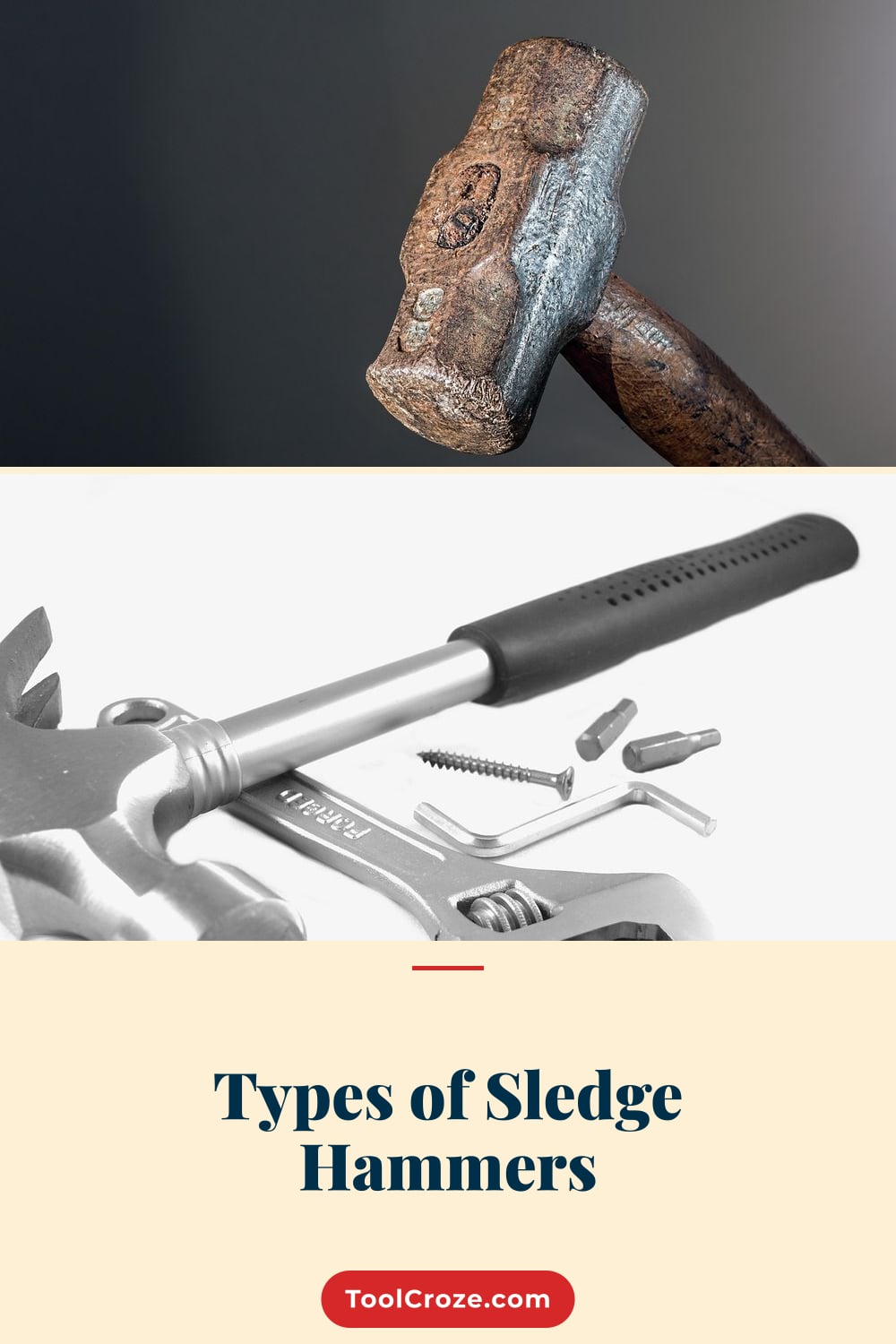
A sledgehammer can feel as though it are alive while the person holds the tool in their own hands. The weight of the tool can do half of the work, and the handle performs all of the other intentions that the person has for the tool. A person who picks the wrong kind of sledgehammer will waste their energy, risk injury with the tool, or be unable to complete the tasks that they needed to complete with it.
The opposite of this scenario will occur if they use the correct tool. Knowing the varieties of sledgehammers is an important that those who casually use this tool often underappreciated. There are several difference between sledgehammers.
These differences include the steel that is used to make the tool, the length of the handle, the shape of the head of the tool, and where the sledgehammer is balanced. Each of these varieties of sledgehammers were created to solve specific sets of problems that were recognized over centuries of building railroads, constructing stone structures, and demolishing buildings. When a person understand each of the types of sledgehammers, they will no longer have to guess which tool they need when they visit a hardware store.
They will be able to select the perfect tool for each task. The first variety of sledgehammer is the long-handled sledgehammer. These sledgehammers has a handle between thirty and thirty-six inches long and weigh between eight and twenty pounds.
Different Varieties of Sledgehammers to Know
1. Long-Handled Sledgehammer
Because of their length, these sledgehammers can swing with a lot of momentum, which is perfect for tasks like breaking up concrete or driving fence posts into the ground. With a long-handled sledgehammer, a person can either hold their hand close to the head of the tool or move to the end of the handle to apply more force to the task. The handles of these sledgehammers are often made from hickory because this type of wood will flex slightly when used to reduce the amount of vibration that the person feels in their hand.
The long handle of these sledgehammers require a lot of overhead clearance when in use. If a person is attempting to work in a tight space like a basement, these types of sledgehammers will become a liability rather than an asset. However, a person who owns only one sledgehammer of any kind will find itself returning to this type of sledgehammer over the years.
2. Shorter Handled Sledgehammer
The second type of sledgehammer is the shorter handled sledgehammer. These tools are also referred to as engineer hammers or club hammers. Engineer’s hammers are shorter in length and weigh between four and ten pound.
These tools are used in tasks that require the worker to be able to move into tight spaces. Stone masons use these tools to tap chisel tools into stone structures. Because these sledgehammers have less velocity due to the shorter handle, these tools are traded for the advantage of being able to feel where the face of the tool lands on the object they are striking.
This advantage is why stoneworkers prefer these shorter handed sledgehammers. A disadvantage to these sledgehammers is that they will not have the same strength as a long handle sledgehammer. Because of this, a person will not be able to use this type of tool to drive a railroad spike.
However, these sledgehammers can be used in a variety of other tasks that require force to be exerted into tight spaces.
3. Double-Faced Sledgehammer
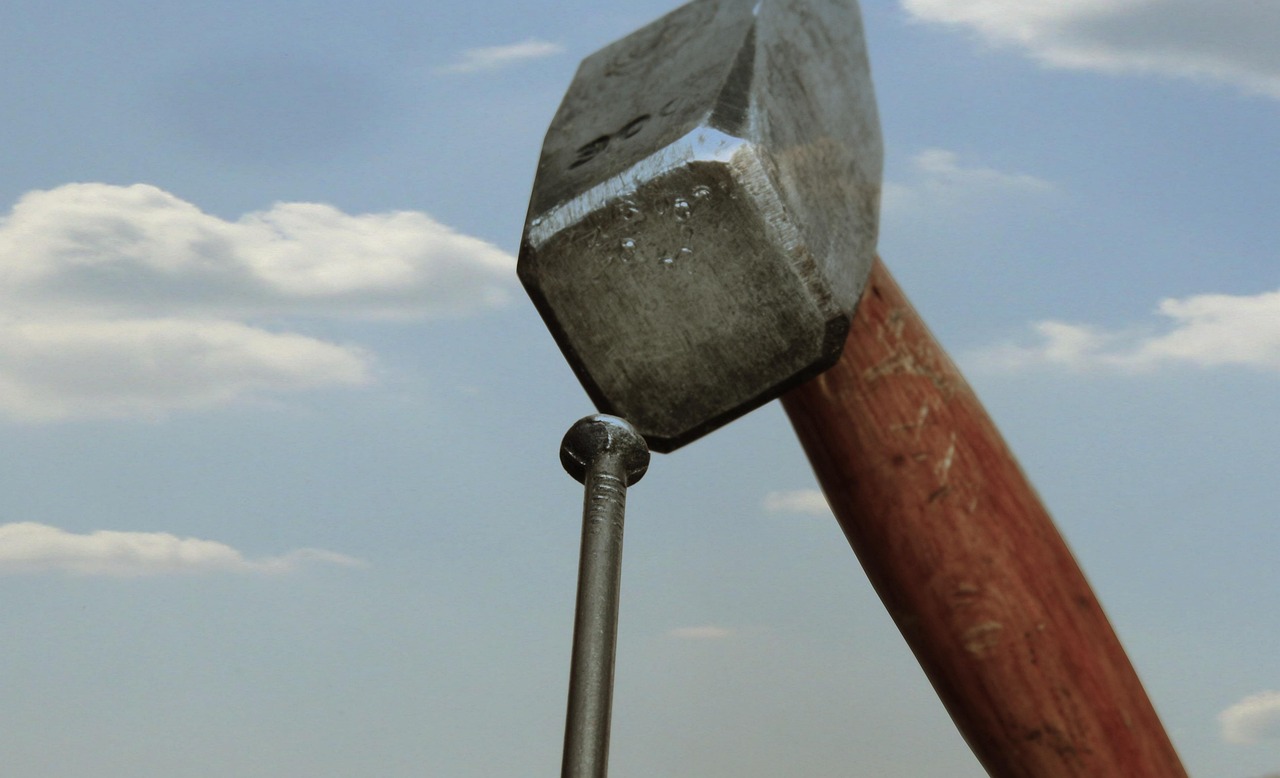
The third type of sledgehammer is the double-faced sledgehammer. These types of sledgehammers may look as if both of the faces are the same, but they are not.
One of the faces is flat and the other is smaller in size and may have a different bevelled edge. Blacksmiths created these types of tools to allow a person to use one tool instead of two to either drive metal or shape the metal. The double-faced sledgehammer is balanced in such a way that it naturally rests in the hand of the person using the tool over long periods of work.
The way that the mass of a double-faced sledgehammer is distributed has one advantage over other sledgehammer types. The heads of the tool are forged in such a way that the added weight of the sledgehammer is located behind the face used to strike objects. This weight is used to allow the tool to act as a committed punch rather than a weak slap with the tool.
This advantage is why double-faced sledgehammers are used to drive heavy pegs into wooden structures. The significant down side to this sledgehammer is its weight. A person will be committed to lifting and using a sixteen-pound sledgehammer with this type of head.
4. Cross-Peen Sledgehammer
The fourth type of sledgehammer is the cross-peen sledgehammer. These types of sledgehammers have a blunt wedge shaped peen that is positioned perpendicular to the main face of the tool. These tools are used to start cracks in rocks or to seat metal wedges into objects.
Railroad workers used these tools in large numbers to set the spikes into the railroad tracks and align the railroad rails before the development of hydraulic tools to perform these tasks. The peen of the sledgehammer presents the person with a second tool to use instead of having to purchase a second sledgehammer. The worker can use the flat part of the tool or they can flip the tool so that the peen of the sledgehammer helps to nudge or crack the object of interest.
Because of the design of the cross-peen sledgehammer, stoneworkers who are used to using these types of tools are the most fan of the tool. The disadvantage of the cross-peen sledgehammer is that the peen will mushroom if the worker misses the object of interest. This tool must be frequently sharpened to keep in use.
5. Drilling Sledgehammer
The fifth type of sledgehammer is the drilling sledgehammer. These types of tools are also referred to as single-jack hammers or two handed drilling hammers. Drilling hammers have a weight between four and eight pound with short handles and striking faces that are designed for hitting long drill steel.
Miners created these types of hammers because they needed to pound drill bits into solid rock for lengthy periods of time. The design of the head of the drilling sledgehammer is made of an octagon or square shape with less weight of the tool in the head. This allows for the mining worker to avoid fatigue due to the added weight of the tool and it can survive thousands of striking blow with the tool.
The advantage of the drilling sledgehammer is the slightly softer temper of the striking face of the sledgehammer. Due to the softer face of the drilling tool, the striking face will mushroom before it shatters the drill steel. This advantage allows for the drill bits to last for a longer period of time.
These types of tools will be of use to those who restore old buildings or foundations of stone, but most people who casually use sledgehammers will never use this type of tool. However, despite how rare it is, these types of tools are still available for those who wish to purchase one.
6. Bushing Sledgehammer
The sixth type of sledgehammer is the bushing sledgehammer. These tools look similar to meat tenderizers. The face of the tool has rows of small pyramidal points that allow the tool to chip at the concrete or stone that is in the way. Restoration masons use these tools to remove old render from stone without harming the stone itself.
These tools can also make a keyed surface for new mortar. The advantage of the bushing sledgehammer is that the many small points of the tool will chip the stone without causing it to spall. This same advantage is why the bushing sledgehammer will not cause any spalling of the stone it is removing.
The disadvantage of the tool is that it moves more slowly in breaking up a slab of stone. A bushing sledgehammer can be compared to a sculptor’s tool that looks like a sledgehammer. This is why it is in its own category for sledgehammer tools.
7. Dead-Blow Sledgehammer
Finally, there is the category of the dead-blow sledgehammer. This type of sledgehammer is a moddern variation of the tool. A dead-blow sledgehammer has a hollow head that contains hundreds of pieces of steel shot and sand.
When swung, the steel moves forward at the time of striking the object and it will not move once it makes contact with the object. The auto body industry or wooden boat makers use this type of sledgehammer. The advantage of a dead-blow sledgehammer is that because there is no rebound in the head of the tool when it strikes the object, the muscles in a person’s arm will not fatigue as quickly during the task.
The disadvantage to the dead-blow sledgehammer is the possibility of the internal shot wearing through the casing of the sledgehammer. Once this happens the tool will become a regular sledgehammer with a hollow head which was a very expensive tool to purchase. Despite this disadvantage, the dead-blow sledgehammer will be of use in situations where a worker needs a sledgehammer that will not bounce from the object being struck.
When choosing a sledgehammer, a person should not think of the brand names of various manufacturers of sledgehammers. Instead, the thought should go into which sledgehammer will best suit the tasks that they will perform with it. For instance, a long-handled sledgehammer may seem ideal to a person, but will eventually cause back pain due to the physical requirements of its long handle.
A short-handled sledgehammer may be purchased for convenience, but it will eventually become frustrating to use when more strength are required. A person should take a moment to imagine the task that will be performed with the tool before purchasing the sledgehammer. A person should consider the type of clearance that will be available to swing the sledgehammer, what type of surface will be struck by the sledgehammer, the duration that the task will take, and what the end result of the job should be.
The sledgehammer that a person purchases will be useful for the tasks that a person can imagine for it. The entire point of owning sledgehammers of any kind is to have the perfect tool for the job that a person performs.
