
Hanging drywall on a ceiling is a task that separate amateur workers from professional workers. The sheets of drywall is heavy, they are awkward to use, and they often crack or sag before being secured to the ceiling. If a person dont use the correct tools for the task, a person will become exhausted, frustrated, and end up with visible seam in the drywall ceiling.
Fortunately, there is specialized tools that will make this task much more manageable. These tools are not expensive, and they do not require much storage space. Most of the tools has a specific use or solve one problem that a person will encounter when installing drywall on a ceiling.
Once a person understands the use of each of these tools, the work will be over sooner and with less aggravation. The following list of drywall tools will provide the most biggest impact on a drywall installer. Each tool was purchased to solve the problems that a person will encounter the moment a person lift the first sheet of drywall overhead.
Essential Tools for Installing Ceiling Drywall
1. Drywall Lift
A drywall lift is the single biggest labor saver out there for drywall installers. A drywall lift can consist of a wheeled base, a tall scissor lift, and a cradle that accepts a sheet of drywall. A person can load the sheet of drywall onto the cradle and raise it to the desired height.
This tool will eliminate the need for one worker to balance a sheet of drywall on one end of there head while they look for a screw gun to secure the drywall to the joists. The drywall panels will not bow or strip due to the drywall being raised by this tool. Drywall lifts will range in height from about four feet to twelve feet.
This will be sufficient for most residential properties with eight-foot and nine-foot ceilings. Most quality drywall lifts will lock into position while a person walks away with the sheet of drywall in place. The cost of renting a drywall lift for a weekend is roughly the same as buying a cheap pizza dinner for helper.
This tool will allow a person to complete the task without needing two additional helpers. For those who will only hang drywall on one ceiling in their lifetime, this tool will save a person from physical pain. The next tool is a drywall T-square.
2. Drywall T-Square
A drywall T-square that a person purchases should not bend under the weight of the sheet of drywall. The T-square that a person uses on drywall should feature a three-inch drywall blade and an adjustable head. A person uses this tool to mark drywall sheets from one end to the other.
Most drywall sheets will need to be cut to accommodate the placement of electrical outlets and recessed lights. The wide blade of the T-square will allow a person to snap a long straight line along the sheet of drywall. This tool will save a person from having to use a utility knife to cut the drywall sheets freehand which could ruin the sheet.
3. Drywall Routers
Drywall routers are similar to miniature version of plunge routers. A drywall router has a narrow bit that will spin at a high speed. Once the person has hung the sheet of drywall on the ceiling, the drywall router can be plunged into the sheet of drywall at the center of an electrical outlet.
The drywall router will cut the sheet of drywall through the gypsum quickly and leave a clean edge to the sheet. The drywall router will save a person from having to use a keyhole saw to cut the gypsum drywall sheets. This tool will save a person from having to make the cut while the drywall sheet is on the ground.
Using a router will allow a person to avoid cutting the sheet too small. The only disadvantage of using a drywall router is the amount of sawdust that will be produced in the process. A person will need to wear a mask when using a drywall router.
This tool will save a person time and frustration, making it worthwhile to include on a list of the best drywall tools. A deadman prop might look like a piece of lumber with a T-foot on one end, but the deadman prop will be one of the most useful tools out there for someone who is installing drywall on a ceiling by themselves. A person will have to make one end of the deadman prop angled to allow it to wedge under the drywall sheet.
4. Deadman Prop
The other end will rest on the floor at around a 60-degree angle. Once a person lifts the drywall sheet with the drywall lift or a person’s hands into the correct position, this tool will allow a person to hold the far end of the drywall sheet. The deadman prop is a simple tool that will allow a person to save money if they have some scrap lumber.
A person can adjust the length of the deadman prop according to the height of the drywall ceiling. This tool act as an additional set of hands to assist in hanging the drywall panel. Professional drywall workers will have several of these tools on the job site.
This drywall tool is not elegant, but it works according to the laws of physics. A drywall adhesive that a person applies with a caulk gun will be the most important tool even though it is not a traditional drywall tool. A person can apply a bead of adhesive to the joists before lifting the sheet of drywall.
5. Drywall Adhesive
This will allow the drywall to create a strong bond with the ceiling joists and save the person from physical pain in the future. A person can purchase an adhesive that is specifically rated for drywall ceilings. One tube can cover two or three sheet of drywall.
Using this tool will allow a person to create a flatter ceiling. This will save a person hours of drying time and hours of sanding the drywall. A screw gun with an auto-feed attachment will save a person from having to search for screws while installing drywall.
6. Auto-feed Screw Gun
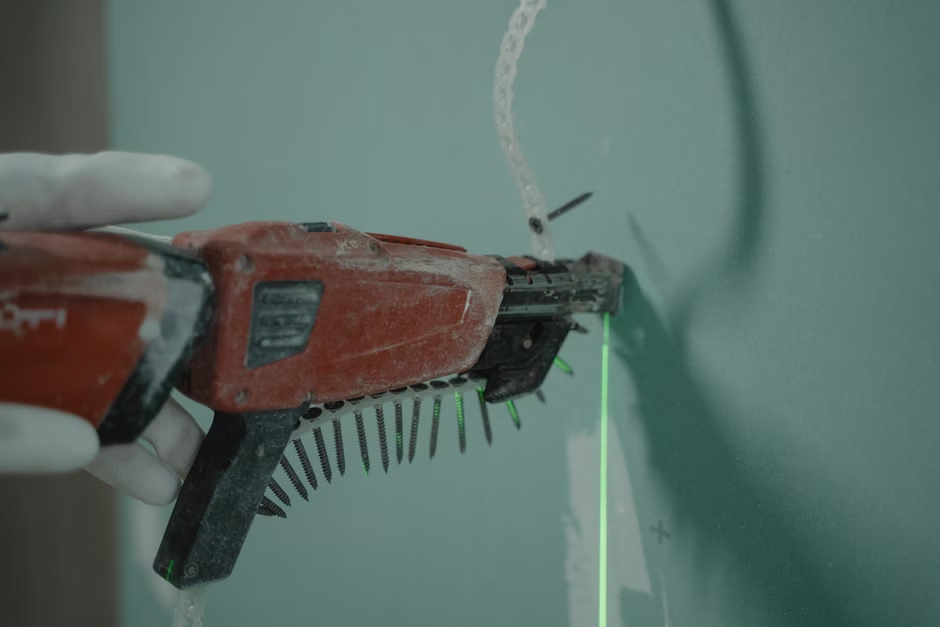
Instead of having to search for the individual screws, a drywall worker can simply pull the trigger on the screw gun. The auto-feed screw gun will automatically feed the screws while the person is installing the drywall. This will save a person from having to cut down on the amount of force with which they hit the drywall as the screws will feed to the proper depth.
A person who is installing drywall overhead with tired arms will find this tool to be of much assistance. The screw gun will save a person from having to deal with the common problem of cutting the drywall with too much force. An auto-feed screw gun will accept both coarse and fine-thread drywall screws.
This tool is an investment that will pay for itself after a person has installed one sheet of drywall. A laser level will allow a person to have a horizontal line projected around the room. Instead of using chalk lines that will leave behind drywall sawdust, the laser level will provide a self-leveling laser line that will remain accurate even if the framing of the house is not level with the floor.
7. Laser Level
A person will have to simply place the laser level on a tripod, turn it on, and use the red or green line to mark the first row of drywall screws. This drywall tool will save a person from having to sand drywall seams later on as the lasers will ensure that drywall sheets are straight. For projects larger than a bedroom, a laser level will save a person time and frustration.
Finally, if a person plans on installing drywall on more than one ceiling, a pair of stilts will be a worthwhile investment. A drywall worker will have to place their feet on stilts to walk around the drywall sheet while they drive the last few screws to secure the sheet. These stilts will allow a person to save their neck and their hands as they will not have to use a ladder.
8. Pair of Stilts
Once a person has become used to walking on stilts, they will become a natural part of the drywall installation process. A drywall worker should practice walking on stilts on the ground to ensure they do not fall while installing drywall. The stilts will add to the weight that a person bears on their legs at the end of the day.
However, stilts will cut a person’s drywall labor time in half. A person’s neck will not hurt and their back will not strain while installing drywall on a ceiling with stilts. These drywall tools will not make a person an expert in drywall installation right away, but they will reduce the physical misery that comes with installing drywall on a ceiling.
For those on a budget, the drywall lift and the drywall T-square are the best to start with. The drywall router and laser level can be added to the tools a person use as the projects increase in size. The next time that a person sees drywall sheets to be hung on a ceiling, they should remember that the best tool is better than brute force to accomplish the task.
Each tool was made to solve specific problem that a person will encounter when installing drywall. With the knowledge of these tools, a person who completes a drywall installation project will have an advantage over a person who does not know the use or benefits of these drywall tools. A person’s back, their schedule for completing the project, and the quality of the drywall installation will benefit from these tools.
