
Concrete fasteners are essential components of the moddern world. However, the majority of individuals do not notice these small metal anchors until they is experiencing the headaches caused by a failed attachment. These small metal anchors is designed to withstand enormous loads, to resist the elements, and to remain in place for decades if you choose the correct anchor for the specific task.
There are, however, several different shapes for the anchors, many different materials from which these anchors can be made, and various methods of installing these anchors into the concrete. Understand the different families of concrete fasteners and their uses. Many construction and installation jobs require concrete anchors to attach to the concrete.
These jobs require the fasteners to provide strength for the attachment, to work in various conditions of the substrate to which they are being attached, to be removable or not removable after installation, and to allow for the fasteners to be installed quickly to minimize the construction time for the job. Because concrete does not allow for many errors in installation, you must understand the difference between the available types of anchors before beginning any installation work. Wedge anchors are some of the first that should be considered for most installation jobs with heavy static loads.
Common Types of Concrete Fasteners to Use
1. Wedge Anchors
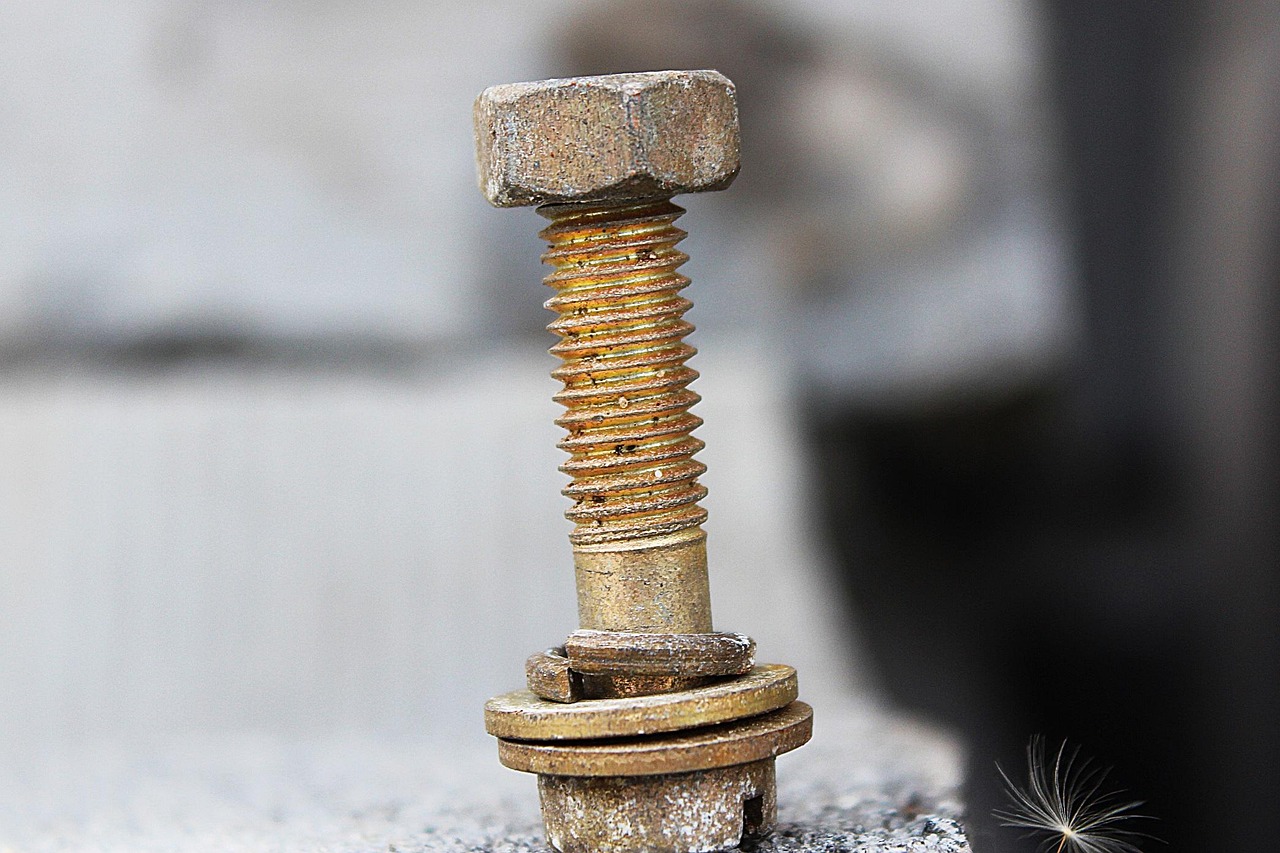
These steel bolts has a tapered bottom that fits into the expansion clip that is cut into the concrete during installation. Once the wedge anchor is installed into the drilled hole in the concrete, tightening the nut will force the expansion clip outward against the walls of the concrete. This allows the wedge anchor to hold tremendous amounts of weight.
Half-inch wedge anchors, for instance, can hold several thousand pounds in shear and tension. Wedge anchors have great shear strength and are used in many construction and installation jobs, including highway guardrails and warehouse racking systems. The one disadvantage of wedge anchors is that they are essentially permanent.
Once the wedge anchor is installed into the concrete, it is essentially impossible to remove the anchor without damaging the concrete. For this reason, wedge anchors should never be used if the removed need to be relocated at a later time. However, if the load and the connection between the structure and the concrete needs to last for the entire life of the building, then wedge anchors are the best choice for the installation job.
2. Sleeve Anchors
Sleeve anchors are another common type of anchor and fall somewhere in the middle regarding both the strength of the anchor and the types of installation jobs for which they are best suited. A sleeve anchor consists of a bolt that passes through a cylindrical metal sleeve. The sleeve has slots in the metal that allow the metal sleeve to expand outward when the nut is tightened.
These types of anchors work well in concrete that is slightly softer than standard concrete or in concrete that has cracked during construction or over time. Sleeve anchors are used in a variety of construction and installation jobs, from metal door frames to electrical panels to residential handrails. These anchors can be installed quickly using a hammer drill.
However, the disadvantage of sleeve anchors is that they require a larger diameter hole than wedge anchors of the same size. Therefore, sleeve anchors cannot be used in jobs in which there is a lack of space for the larger diameter hole. However, if medium loads are to be exerted on the structure using the sleeve anchor, then sleeve anchors are difficult to beat as an installation solution.
3. Drop-in Anchors
Drop-in anchors are among the weakest of all the types of concrete anchors. These drop-in anchors are short metal cylinders that has threads inside the metal. The drop-in anchor is dropped into the drilled hole.
After the drop-in anchor is dropped into the drilled hole, a setting tool strikes the drop-in anchor to expand the wedge inside the metal cylinder. Once expanded, the bolt can then be threaded into the drop-in anchor. The benefit of using drop-in anchors is that the bolt can later be removed from the anchor.
This makes them a favorite among those who must attach machinery that will need to be moved or who want to hang pipes from the ceiling that may need to be rerouted in the future. However, the disadvantage of using drop-in anchors is that they will only work in solid concrete. Therefore, drop-in anchors will never work in concrete block or brick.
Additionally, the hole into which the drop-in anchor is to be installed must be of the correct size since there is no expansion of the drop-in anchor along the sides of the drilled hole. For jobs that require the fastener to be flush with the concrete and for attachments that must be removed, drop-in anchors are the best solution.
4. Tapcon Screws
Tapcon screws, which are also referred to as concrete screws, are among the strongest of the small metal anchors used in construction and installation work.
Tapcon screws are the same as wood screws, but with special threads. To install a Tapcon screw, you drill a hole into the concrete. After drilling the Tapcon screw hole into the concrete, you use a compressed air hose to remove the dust from the newly drilled hole.
Then, you insert the Tapcon screw into the drilled hole. Because of the special threads on the Tapcon screw, the threads will cut into the concrete as the screw is driven into the concrete. There is no expansion clip, no sleeve, and no nut for Tapcon screws.
The simplicity of the installation of these anchors means that even those who do not possess much experience with construction tools can successfully use these anchors to attach ledger boards, outdoor lighting fixtures, or metal flashing on windows. Two common versions of the Tapcon screw are the carbon steel and stainless steel versions. The stainless steel version is used for indoor environments or coastal environments where moisture is a concern.
Additionally, because of the strong threads on the screws, Tapcon screws can be used several times before the threads in the concrete wear down. Therefore, the strength of the screw may be lessened with repeated use. However, if light or medium loads need to be supported, and if the ability to remove the installed screw is important, then Tapcon screws are the best choice for the installation job.
5. Hammer Drive Pins
Hammer drive pins are among the fastest of all the available types of anchors. The hammer drive pins consist of a nail-like pin with a washer head and a metal sleeve that is preassembled with the pin. To install the hammer drive pin, you push the pin into the predrilled hole in the concrete.
After pushing the pin into the predrilled hole, you smack the hammer drive pin with a hammer. The impact of the hammer will drive the center pin of the hammer drive pin, which in turn will expand the metal sleeve of the pin. Once expanded, the hammer drive pin creates a permanent installation in just a few seconds.
Electricians use hammer drive pins for their conduit straps. Additionally, HVAC crews use hammer drive pins to hang supports for the ductwork that moves conditioned air throughout the building. The installation of hammer drive pins does not create any dust or require the use of electricity.
However, the disadvantage of hammer drive pins is in their load capacity. They are not constructed to support heavy loads. They can be used for hanging light fixtures, furring strips on walls, and conduit.
However, they should never be used for shelves or railing systems.
6. Toggle Bolts
Toggle bolts are used for hollow concrete block. Standard concrete block has hollow voids inside the block.
If expansion anchors are installed into these voids, the anchors will have nothing on which to push. A toggle bolt has a spring-loaded wing that is inserted into the hollow void in the block. After inserting the toggle bolt into the hollow block, the spring-loaded wing of the toggle bolt will spring open to the inside of the block.
When the bolt is tightened, the wings of the toggle bolt will clamp onto the inside face of the block. This provides the toggle bolt with surprising holding power in a substrate that is mostly air. Masons or renovation crews who is installing shelving or cabinets onto basement walls use toggle bolts.
Once the toggle bolt is installed into the hollow block, it cant be removed. However, this is the tradeoff that must be made to provide the holding power required in these types of installations.
7. Chemical Anchors
Chemical anchors, also referred to as epoxy anchors, are some of the strongest concrete anchors available.
This type of chemical anchor requires drilling a hole into the substrate. Following the drilling of the hole, you thoroughly clean the hole of any debris. Following the cleaning of the drilled hole, a two-part epoxy is injected into the drilled hole.
Then the threaded rod is inserted into the drilled hole. The epoxy will flow into the pores of the substrate and then cure into a bond that is stronger than the substrate itself. Chemical anchors are used in seismic retrofits of buildings and in the construction of highway bridges.
These types of chemical anchors are used in situations where vibrations will act upon the anchor, such as seismic activity. Because chemical anchors require more time and are more expensive than the other types of anchors, you would never use them unless the load for the installation was critical and the failure of the installation would be unacceptable.
8. Expansion Shields
Expansion shields, also known as lead anchors and rawl plugs, are among the original types of concrete anchors.
The expansion shield is a soft metal sleeve that is placed into the drilled hole. Then, the lag screw is driven into the soft metal of the expansion shield. The soft metal will deform as the lag screw is driven into the expansion shield, and the soft metal will expand outward against the walls of the concrete.
Expansion shields are used in a variety of installations, such as hanging lightweight picture frames on basement walls or securing baseboard trim. The expansion shield will work in holes of varying diameters and will work in both solid concrete and concrete block. Because expansion shields are low-cost and simple to use, every handyman has one in there toolbox.
However, they cannot support the same loads as wedge anchors and expansion anchors. Each of these types of anchors has endured over the decades due to their strength and their use in a variety of construction and installation jobs. However, you must not simply purchase the first type of anchor that you find in the hardware store.
Each type of fastener requires an evaluation of the needs of the installation site and job. The requirements to consider include the load that must be supported by the installation, the condition of the substrate into which the anchor will be installed, whether the installation needs to be permanent or not, and the time available to install the anchor. By understanding these requirements, you can determine which type of anchor is best suited for your installation job.
Next time you find yourself faced with the installation of an attachment to a bare wall of concrete, remember these different types of anchors. The best choice is not necessarily the most expensive or the fastest method of installation. Instead, think through the requirements of the installation job and purchase the anchor that meets those requirements.
By doing so, youll never think about installing concrete anchors in the same way again.
