
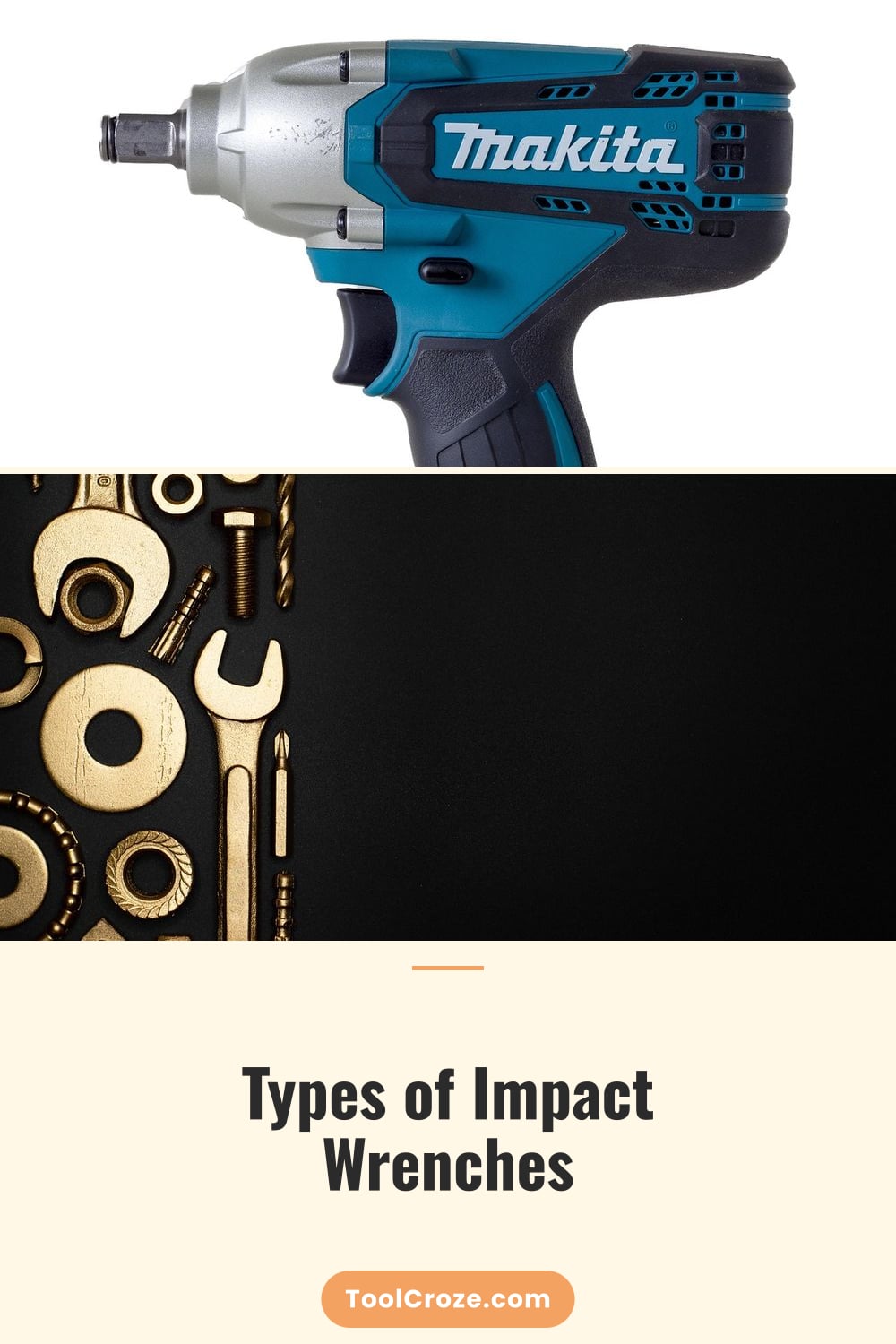
Impact wrenches is tools that will transform your most difficult job into manageable jobs. You may use an impact wrench to change a tire in a busy garage. However, you may use an impact wrench to performing tasks like assembling heavy machinery.
Furthermore, you may use an impact wrench to loosen a bolt that is rusted in place and an ordinary tool cannot loosen it. An impact wrench can deliver a sudden force that twist and provides more power than that of an ordinary drill. Many people enjoy the sound of a fastener finally loosening.
However, there is many different models of impact wrench available to consumers, which can be somewhat confusing. Not all impact wrenches are created equal, and purchasing the wrong tool for the job will waste your time and money. The difference between impact wrenches relate to the power source for the tool, what kinds of jobs these impact wrench tools is designed to perform, and the kinds of environments in which they are used.
For instance, some impact wrench tools is designed to be compact to perform tasks within a tight space in an engine. In contrast, other impact wrench tools are large and perform similar to miniature jackhammers used in a factory setting. There are different kind of impact wrench tools available, each with there strengths.
The following list will describe the different types of impact wrench tools available, what they are for, and the tradeoff in using each kind.
Different Types of Impact Wrenches Available
1. Corded Electric Impact Wrenches
Corded electric impact wrenches are some of the most common tool in a workshop. These tools are designed to be plugged directly into a power outlet in the wall.
Thus, they will never run out of power. These tools are popular with mechanics who remove the lug nut from a fleet of company vehicles every day. The motors in corded impact wrenches are lighter than those in cordless impact wrench tools.
This allows mechanics to experience less fatigue when using the tool to perform tasks above their heads. However, the cord on these tools can get in the way of car lift or other tools in the workspace. Furthermore, the cord may become a tripping hazard.
Another downside is that the user must always be near an electrical outlet. However, corded electric impact wrench tools are an excellent choice for workshops with power outlet and for individuals who value consistent performance rather than mobility.
2. Cordless Impact Wrenches
Cordless impact wrenches have become a very common tool in workshops over the last ten year. The use of lithium-ion batteries in these tools allows the workers to move freely around the work area. Furthermore, moddern brushless motors allow cordless impact wrenches to generate up to six hundred foot-pounds of torque while remaining small enough to fit into one hand. The downside of these tools is that they do run out of power after a period of use.
Workers who use cordless impact wrench tools frequently have to ensure that at least two battery pack are charging at all times. The weight distribution of the tool may change with the loss of the batterys charge. Additionally, the weight distribution change again if the worker changes the battery to a larger battery cell.
However, the freedom from cords makes cordless impact wrench tools the most common choice among mobile mechanics or individuals who work on projects outside of normal working hour.
3. Pneumatic Impact Wrench Tools
Pneumatic impact wrench tools are considered to be the best kind of impact tool in many heavy-duty environment. These tools use compressed air to supply the power needed to loosen or tighten bolts.
This tool is commonly used in professional tire shop. A high-quality pneumatic wrench can generate more than one thousand foot-pounds of torque while maintaining a low overall tool weight due to the lack of a motor within the tool. However, air compressor infrastructure is required for pneumatic impact wrench tools.
Additionally, air hose and lubrication of the tool are also required. However, once set up, these tools are very durable and can handle exposure to water and dust. Furthermore, pneumatic wrenches are better at taking drop than electric impact wrenches.
If a workshop already owns a large number of air-powered tools, purchasing pneumatic impact wrench tools will become a necessity.
4. Hydraulic Impact Wrench Tools
Hydraulic impact wrench tools are used for specialized task. Unlike air or electric tools, these tools use raw power from a hydraulic fluid in hoses to the tool from a separate power pack.
This type of hydraulic design allow people to put a large amount of torque into tools that still weigh less than one might expect. Rescue crews and technician use these types of wrenches when they are dealing with large equipment whose bolts have seized due to weathering. Additionally, these tools are used on large machinery that is often found in mining equipment.
The tradeoff for using a hydraulic impact wrench is that it is a complex tool. Due to the complexity of the fluid system, there is many maintenance issues for the user and the hoses can become stiff. However, for the type of jobs that are required, nothing else is as effective.
These are not tools that should of been purchased for use in a garage, but for tasks that are too difficult to complete with a regular wrench.
5. Right-Angle Impact Wrenches
Right-angle impact wrenches are used to solve the problem of clearances. The head of these tools is sitting at a ninety-degree angle to the body of the tool.
These are often used by auto technician to service the newer cars. Because the tool is designed to allow for a ninety-degree turn, it does not have the same amount of maximum torque as a wrench that is not restricted to only turning in a certain direction. However, right-angle wrenches do allow people to use standard hex anvil so that there is no issue with being unable to change the sockets due to the limited space around the fastener.
While these tools are not often purchased by individuals as their first impact wrench purchase, there are many that will find the need for one after purchasing their first impact wrench.
6. Compact Stubby Impact Wrenches
Compact stubby impact wrenches are tools that were created with the intention of being able to access tight spaces and to be able to maneuver the tool in those tight spaces. Compact stubby impact wrenches are only about six inch in length.
These types of impact wrenches are made by shortening the size of the anvil and the motor housing. It is also common for the manufacturers to also reduce the torque that is provided by the compact stubby wrench. These types of tools are commonly used for working on car dashboards, cars that require interior repairs, or any job in which the user’s hands is in a tight spot.
Additionally, compact stubby wrenches will have good battery life due to the small motor, but the tool can overheat when used for extended periods of time. Compact stubby wrenches are a tool that can be purchased for individuals who often work on vehicles or who have to do jobs in tight spots.
7. High-Torque Impact Wrenches
High-torque impact wrenches are the opposite of compact tools. High-torque impact wrenches are often built to be more durable. Additionally, high-torque impact wrenches can deliver more than fourteen hundred foot-pounds of torque. These types of impact wrenches are used by those in truck fleets, agricultural equipment, and even in the structural steel industry.
Anvils of these types of tools are usually three-quarters of an inch or even larger in size to allow for the increased force. Additionally, the clutches of these tools are built to take the increased amount of force that these tools can deliver. Due to the high amount of vibration that is created with these tools, users must wear anti-vibration gloves when using these tools.
Additionally, the speed with which the jobs are completed is the benefit of high-torque tools. A job that takes twenty minutes with hand tools can be finished in a fraction of that time with a high-torque impact wrench. Additionally, any job that involves fasteners that are larger than half an inch in diameter will benefit from using a high-torque impact wrench.
8. Specialty Impact Wrenches
Finally, there are specialty impact wrenches. Underwater impact wrenches are made to be sealed against saltwater so that divers can use them working on offshore oil rigs. Additionally, there are versions of impact wrenches that are made of non-sparking material so that they are safe to use in chemical plants.
Other features of impact wrenches may include sound-dampening tools, quick-release chucks, and other technology created by the manufacturer as a solution for the noted limitation of the tool. Each of these different types of impact wrenches will be appropriate for the demands that one encounter in their work. For instance, a hobbyist restoring classic cars may only need a cordless impact wrench of the mid-range, as well as a compact stubby wrench for tasks in tight spots.
A technician that works at a truck stop full-time may own each of these different types of tools and use each of them several times during the shift. There is a satisfaction in using the correct tool for a job to make a difficult job easy to perform. Once an individual has experienced the ease with which a job can be performed using the proper impact wrench, every bolt that is rusted will be seen as an opportunity to perform that task instead of an obstacle to be overcome.
