
Cutting pliers are tools that many peoples do not think about until they find themselves faced with a stubborn wire or pin that is preventing them from completing their project. For those with the right pair of cutting pliers, they can find themselves saving time and money by successfuly completing their tasks with minimal frustration. However, for those who dont have a proper cutting pliers for their project, they can find themselves frustrated by the difficulties with there projects.
All toolbox should have at least one pair of cutting pliers. However, the cutting pliers within the hardware store aisles comes in many different varieties, each with different cutting features. Many of these cutting pliers may appear similar to other brands of cutting pliers, but upon picking them up, they may find that the leverage, cutting angle, or edge of the cutting pliers differ slightly from the other.
For those who understand each variety of cutting pliers available, they can save themselves time, money, and their knuckles from excessive cutting. Cutting pliers have evolve over time to have specific designs for those who must perform certain tasks or use specific materials within their trades. As a result of these different designs, cutting pliers are typically not multifunctional tools that may be required for each trade, but rather have a specific use.
Common Types of Cutting Pliers to Use
1. Diagonal Cutting Pliers
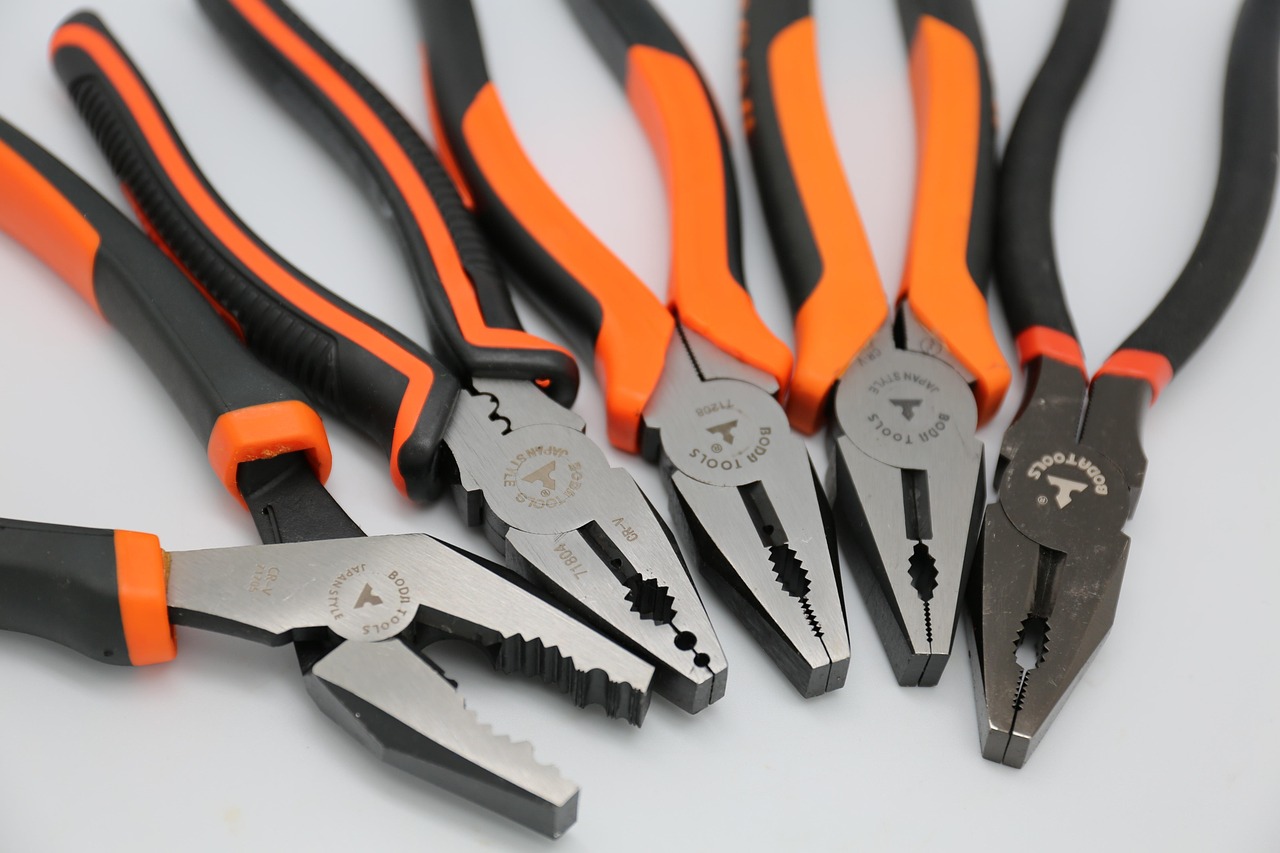
Diagonal cutting pliers are also referred to as “dikes” or “side cutters” and are the most common type of cutting pliers that can be seen in toolboxes. The purpose of the angled jaw of these cutting pliers allow electricians to use them to snip the ends of their electrical wires. They can also be used in tight spaces that would make it difficult for other types of cutting pliers to access the objects that they need to cut.
Diagonal cutting pliers are versatile and can snip both 18-gauge and 12-gauge electrical wires. However, they are not recommended for cutting hardened steel pins. Smaller sizes of diagonal cutting pliers are used for delicate electronics projects while larger sizes is used for residential wiring projects.
Additionally, a cheap second pair of diagonal cutting pliers is needed for dirty jobs that may damage their nice cutting pliers.
2. End-Cutting Pliers
End-cutting pliers are similar to diagonal cutting pliers, but with a feature where the jaws are rotated 90 degree. This 90 degree rotation allows individuals to clip items flush with other items in their project.
Model makers use these types of cutting pliers to snip the ends of pins made of brass. However, because end-cutting pliers have less leverage than diagonal cutting pliers, these tools are only used on softer materials or for wires with small diamiters. Additionally, these cutting pliers may become difficult to use on heavy cables.
3. Lineman’s Pliers
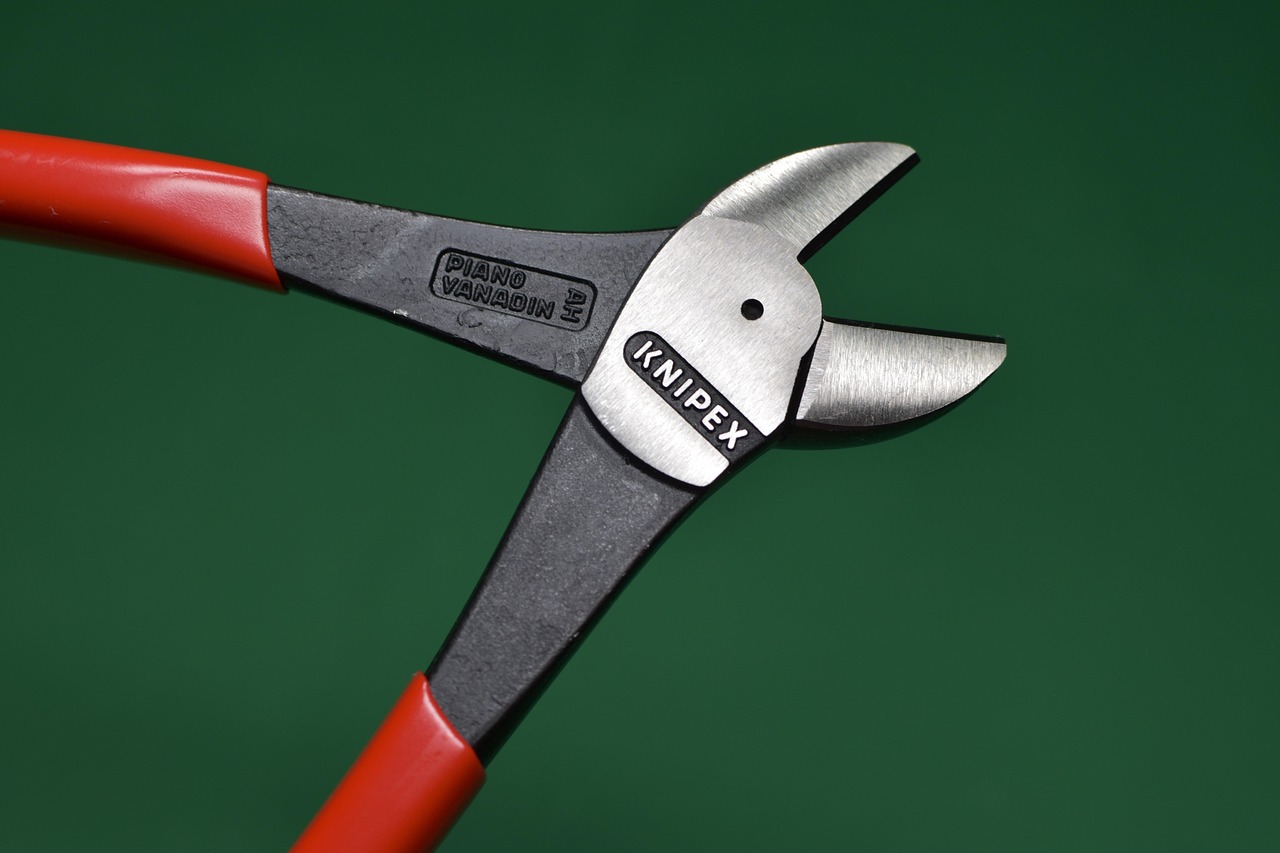
However, they can perform the same task as diagonal cutting pliers but in a confined area. Lineman’s pliers are also referred to as “combination pliers,” as they have cutting ends near their hinge and gripping ends near the tip of the pliers. Linemen made these types of pliers for the telephone industry to clip, twist and pull telephone wires with one tool.
Because of their features that allow them to cut thicker gauge wires than diagonal cutting pliers will endure, those who have to work with thick gauge wires use lineman’s pliers. A good pair of lineman’s pliers will endure years of heavy use. Though they may cost more upfront, lineman’s pliers will pay for themselves in situations like cutting wires on a ladder in the winter.
However, lineman’s pliers are not as useful for delicate electronics work due to there added weight. For these reasons, tradespeople who must complete many job will own both lineman’s pliers and diagonal cutting pliers.
4. Needle-nose Cutting Pliers
Needle-nose cutting pliers feature the same jaw shapes as needle-nose pliers but have a cutting area near the hinge of the pliers.
These types of cutting pliers are used to clip or snip wires in areas where the long jaws can reach items that would otherwise be inaccessible and where cutting tools can avoid having to change tools to perform the required snipping tasks. Needle-nose cutting pliers also come in different sizes, with the longer and finer versions used for delicate projects. However, they bend more easily than the other sizes of needle-nose pliers.
The short and stout versions of needle-nose cutting pliers are stronger but have less reach. A medium sized seven inch pair work the best for most projects. Additionally, the cutting edges on needle-nose cutting pliers are smaller than the other types of cutting pliers, so they are best used on lighter materials.
If used for tasks beyond their cutting pliers capacity, the cutting edges of needle-nose cutting pliers will become nicked and ruined.
5. Bolt Cutters
Bolt cutters are similar in appearance to cutting pliers but feature long handles to increase the leverage applied to the task. Bolt cutters are used to snip the ends off of very thick wires, bolts, chains, padlocks or rope.
The jaws of bolt cutters are made of hardened steel to allow them to cut the items mentioned above without damaging their cutting jaws. The rating of bolt cutters should be understood to ensure that they are used appropriately. For instance, a 24 inch bolt cutter may be able to snip half inch steel but may damage the bolt cutters if they are attempting to snip a chain.
Additionally, bolt cutters will crush the end of the wire rather than snipping it neatly. Though very useful tools, bolt cutters may be best reserved for occasional emergency job.
6. Wire Strippers with Integrated Cutters
Wire strippers with integrated cutters have become more sophisticated in recent years and often feature notches of different sizes to fit wires of different sizes.
Additionally, wire strippers also feature a cutting area near the hinge so that they can snip the wires that are stripped of their insulation. The best wire strippers will not nick the wire so that they will not cause resistance in the wire. Cheap wire strippers can nick the wire because of there low quality so that when the wires are pulled, the nicked strand will eventually break the wire.
Quality wire strippers are so effective that they are used for every task without needing to think about their tool. The built in cutter on wire strippers is typically enough for small wires; however, they will not be able to complete the same tasks as a diagonal pair of cutting pliers.
7. High-Leverage Compound-Action Cutters
High-leverage compound-action cutters allow a person with average strength to snip thick wires like aircraft or piano wire without having to utilize a separate hydraulic tool.
Though these cutters are heavy with added bulk to the tool, the enhanced cutting power is essential for certain trades or projects. The real secret to cutting pliers that will last for many years and perform their tasks efficiently is proper maintenance. A quick wipe down with a cloth after use, the occasional drop of oil on the pivot of the tool and the use of a fine sharpening stone will allow cutting pliers to save time and money for the individuals who own these tools.
Without proper maintenance, the individual will have to use more force when snipping wires or objects with their cutting pliers. This extra force may cause the cutting pliers to slip on their task and damage the persons workpieces. Additionally, it may damage the skin on the persons fingers.
However, if the individual sharpens and properly maintains the cutting pliers, they will allow the individual to perform their tasks with less force and with more control, which is the point of purchasing quality cutting pliers. In order to choose the correct cutting pliers for an individual’s projects, they must understand the types of materials that they will be cutting the most with their tools and the access that they will need to those materials. Professionals in the electrical trade may own four different varieties of cutting pliers.
However, individuals who are just occasional enthusiasts in the trades may only need two varieties to complete their projects. The ability to make perfect and clean snips with a projects materials can be extremely satisfying to the individual who has to perform the project. Thus, the feeling of satisfaction that comes with successfuly using their cutting pliers is worth the money that they cost.
The next time an individual encounters difficulties with their current cutting pliers, they should not use more force to the tool. Instead, they should recognize that another variety of cutting pliers was made for that specific task.
